
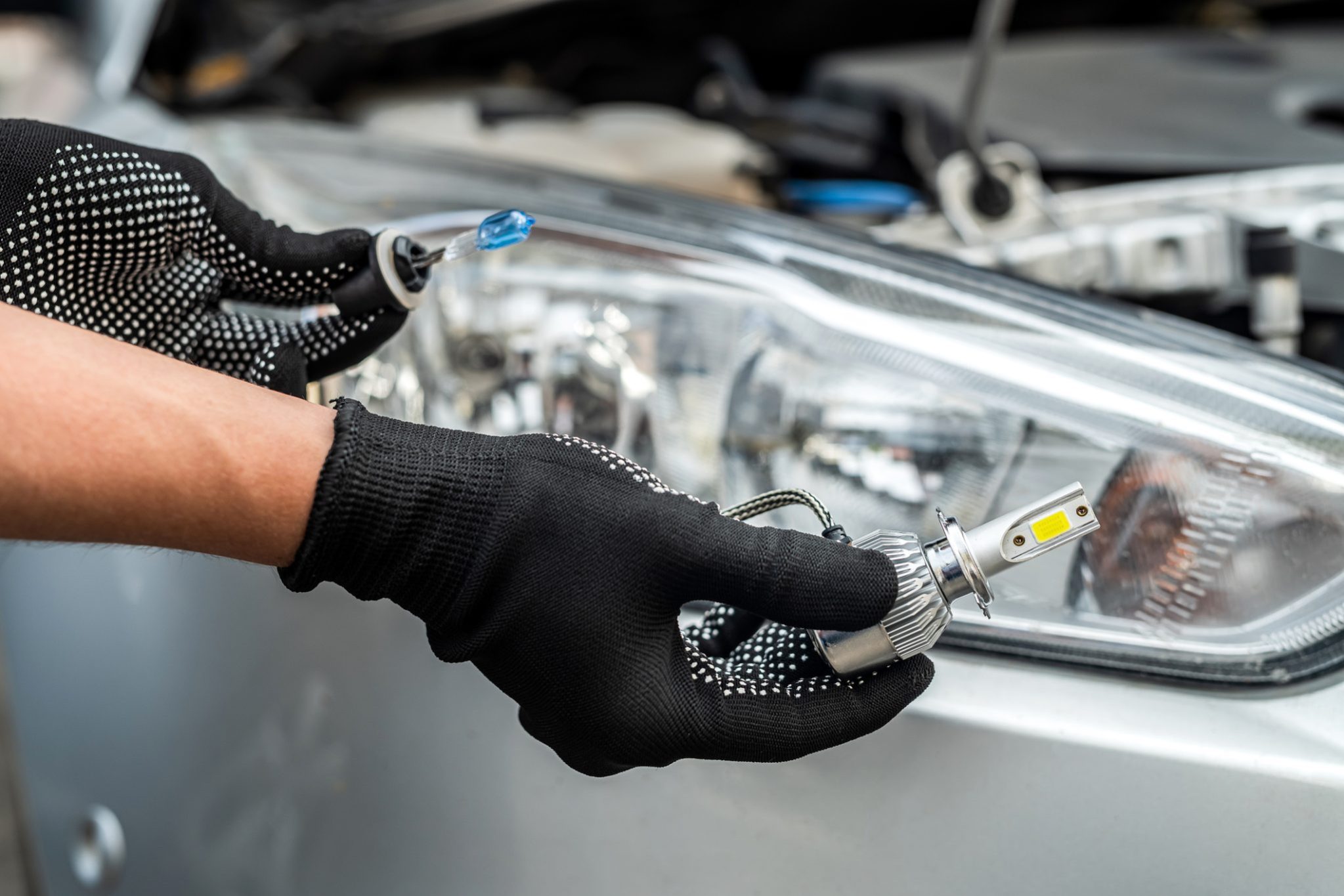
That said, LED headlights can be dangerously bright and may contribute to nighttime crashes by impairing other drivers’ visibility. When an accident involves improper or unsafe lighting, understanding how Michigan’s car accident laws and traffic regulations apply can be critical. A motor vehicle accident attorney near you can help investigate whether headlight violations played a role in the crash and pursue the compensation you deserve.
LED headlights have become increasing popular because of their efficient use of energy, long durability, and brighter illumination. This improved visibility is the overwhelming reason why you see so many vehicles on the road with them installed.
Michigan is known to have more days of in-climate weather than many other states and increased visibility is a huge pro of utilizing LED’s. Another pro is they have less heat output. This means they will prolong the life of both the bulb and the housing that the light is in. The only real downsides of LED lights is that they are so bright, other drivers on the road can have difficulty seeing as they can be somewhat blinding and they are more expensive when replacing and more difficult to install.
Car Lighting Regulations in Michigan
The Michigan Motor Vehicle Code requires drivers to only have lights that are permitted. This means that any additional lights must be covered or turned off completely while driving. Some examples of lights that aren’t permitted under the code include:
- Neon Lights including license plates
- Colored license plate lights
- Exterior neon lighting (neon underbody lighting)
- Neon license plate frames lights
- Interior neon lighting (interior after market lighting)
- Flashing light, oscillating light, or rotating lights
- Tire valve stem lights
- Windshield wiper lights
What Are The Brightest Headlights Allowed By Law?
Laws regarding headlights are made at both the State and Federal level. Michigan does not have specific rules regarding brightness under the Michigan vehicle code, but the federal guidelines do have restrictions. Federal Motor Vehicle Safety Standard No. 108 states that the maximum amount of brightness allowed is 3,000 Lumens.
Car manufactures should meet these federal requirements. If you have stock vehicle headlights (amber light) which were not changed to aftermarket LED lights, they should be perfectly legal. The issue is when individual drivers purchase and install LED lights themselves which exceed this 3,000 Lumen limit. If you decide to purchase aftermarket lights, make sure they fall under this federal guideline.
Are Blue or Purple Headlights Legal?
No, they are not. Any other color besides white and yellow headlights are not legal in Michigan. Blue and purple high intensity discharge or Xenon lights are almost always illegal not only in Michigan, but federally as well. Simply put, colored headlights are illegal. Car manufacturers do not install this color lighting in vehicle so you should have nothing to worry about unless you purposely put in lights that aren’t white or yellow.
Do LED Headlights Cause Accidents?
LED headlights that are extremely bright can be dangerous to oncoming traffic. Intense glare may cause temporary vision loss for other drivers, which creates a serious road safety concern.
Traditional halogen headlights are significantly dimmer and typically emit between 1,000 and 1,500 lumens. Newer LED bulbs often produce around 3,000 lumens, which is roughly double or even triple the brightness.
Because LED headlights are a relatively recent development and most bright LED headlights remain legal, there is still limited research about their long term safety impact. Few formal studies have examined whether brighter headlights directly increase crash risk.
However, roadway safety experts generally recognize that many accidents are still caused by common driver behaviors such as speeding and distracted driving accidents. Reduced nighttime visibility from glare could potentially make these already dangerous situations even worse, especially when drivers have only a brief moment to react to changing traffic conditions.
Accidents Caused by LED Headlights: Who is at Fault?
Driving at night can quickly become dangerous when another vehicle has excessively bright headlights or high beams activated. Intense glare can temporarily reduce visibility and make it harder to see the road ahead. This risk becomes even greater in situations like intersection accidents, where drivers must quickly judge distance, right of way, and changing traffic signals.
Proving that bright headlights caused a crash can be difficult. To establish negligence, an injured driver must show that the other motorist violated a safety rule or acted unreasonably under the circumstances. In most cases, liability may arise if a driver installed illegal headlights or improperly used high beams when other vehicles were nearby.
Even when fault is disputed, injured drivers may still receive benefits under Michigan’s no-fault insurance system. However, recovering pain and suffering compensation typically requires proving that the other driver was responsible for the crash. In some situations, fault may be shared under Michigan’s comparative negligence rules, which can affect how damages are awarded.
Other Rules For Michigan Headlights
Michigan also has additional rules regarding headlights, tail-lights, spotlights, and fog lights.
- Headlights – 2 minimum (minimum height of 22 inches and maximum height of 54 inches)
- Tail lights – 2 minimum (there is no minimum or maximum height)
- Spot lights – 2 maximum (there is no minimum or maximum height)
- Fog lights – 2 maximum (minimum height of 12 inches and maximum height of 30 inches)
Contact A Michigan Auto Accident Attorney
If you were injured in a crash and believe excessive glare from LED headlights contributed to the accident, it may still be possible to pursue a claim. Proving that headlight glare caused visual impairment can be challenging and often requires careful investigation of the surrounding circumstances.
An experienced attorney can help evaluate liability, protect your insurance benefits, and determine whether a negligence claim may be appropriate. Learn more about your legal options after a Michigan car accident.
For questions about your situation, contact The Clark Law Office to schedule a free consultation.