

Car insurance ads often emphasize how much drivers can save by choosing lower Personal Injury Protection coverage limits. What those ads rarely explain is how quickly medical costs can exceed those limits after a serious crash. In Michigan, the difference between capped and unlimited PIP coverage is not just a pricing decision. It is a financial risk decision that can affect your medical care, independence, and long-term stability after an accident. Understanding how these coverage options actually function in real injury scenarios is essential before you ever need to use them.
What Michigan PIP Coverage Options Exist in 2026?
Michigan drivers can choose from several Personal Injury Protection coverage levels, each offering a different amount of medical expense protection after a crash. These options were created after the state’s No Fault reform and allow drivers to balance monthly premiums against potential out-of-pocket risk, but once a policy is selected, that limit controls how much medical care the auto insurer must pay if a serious injury occurs. In practical terms, PIP covers accident-related treatment, rehabilitation, attendant care, prescriptions, and recovery services, and the real difference between coverage tiers is not what they pay for, but how long those benefits last before they stop.
Michigan PIP Coverage Levels Explained
| Coverage Tier | What It Actually Covers | The "Hidden" Risk in 2026 | Recommendation |
|---|---|---|---|
| Unlimited | Lifetime medical, rehab, and specialized home care. | None. This is the only Tier that fully protects your home and life savings. | The Gold Standard. |
| $500,000 | Initial ER and surgery. Roughly 18 months of moderate rehab. | The "Medical Cliff." A single week in a high-intensity ICU can eat 30% of this cap. | High Risk. |
| $250,000 | Basic stabilization and short-term ER care. | Instant Exhaustion. In 2026, a spinal cord injury or TBI will blow through this before you leave the hospital. | Danger Zone. |
| $50,000 | Only for those on Medicaid. Very limited. | Asset Exposure. If your bills hit $51k, you may be personally sued by providers or lose access to private doctors. | Bare Minimum. |
| Opt-Out | $0 from your auto insurer. Relies entirely on Medicare. | The Care Gap. Medicare does not pay for the long-term "Attendant Care" (home nursing) that No-Fault historically covers. | Seniors Beware. |
How Fast a $250,000 Policy Can Run Out
Many drivers assume a $250,000 PIP limit would be more than enough after an accident. In reality, even a moderate injury can generate medical bills that approach or exceed that amount within weeks. Consider a realistic scenario involving a traumatic brain injury that requires emergency treatment, surgery, and rehabilitation. The costs below reflect typical ranges seen in serious injury cases and illustrate how quickly expenses can accumulate before long term recovery even begins.
| Timeline | Expense Category | Estimated Cost | Running Total |
|---|---|---|---|
| Day 1 | Air ambulance and emergency stabilization | $48,500 | $48,500 |
| Days 2 to 14 | Trauma surgery and ICU hospitalization | $155,000 | $203,500 |
| Days 15 to 30 | Inpatient acute rehabilitation | $65,000 | $268,500 |
| Day 31 | Medical equipment and prescriptions | $14,000 | $282,500 (Limit Exceeded) |
In this scenario, the policy limit is reached before the patient has even returned home. Once that $250,000 threshold is hit, PIP medical coverage stops paying for additional treatment. Ongoing therapy, follow-up care, and long-term support must then be covered by other sources such as private health insurance or personal funds.
Expert Insight: In many catastrophic injury cases, the most expensive phase of recovery begins after hospital discharge. When benefits end early, patients may lose access to the very services that determine whether they regain independence.
The Real Cost of Long Term Care After a Michigan Crash
Many drivers assume expenses end when a patient leaves the hospital. In serious injury cases, the opposite is often true. The largest financial exposure frequently begins at home, when ongoing supervision or assistance with daily living becomes necessary.
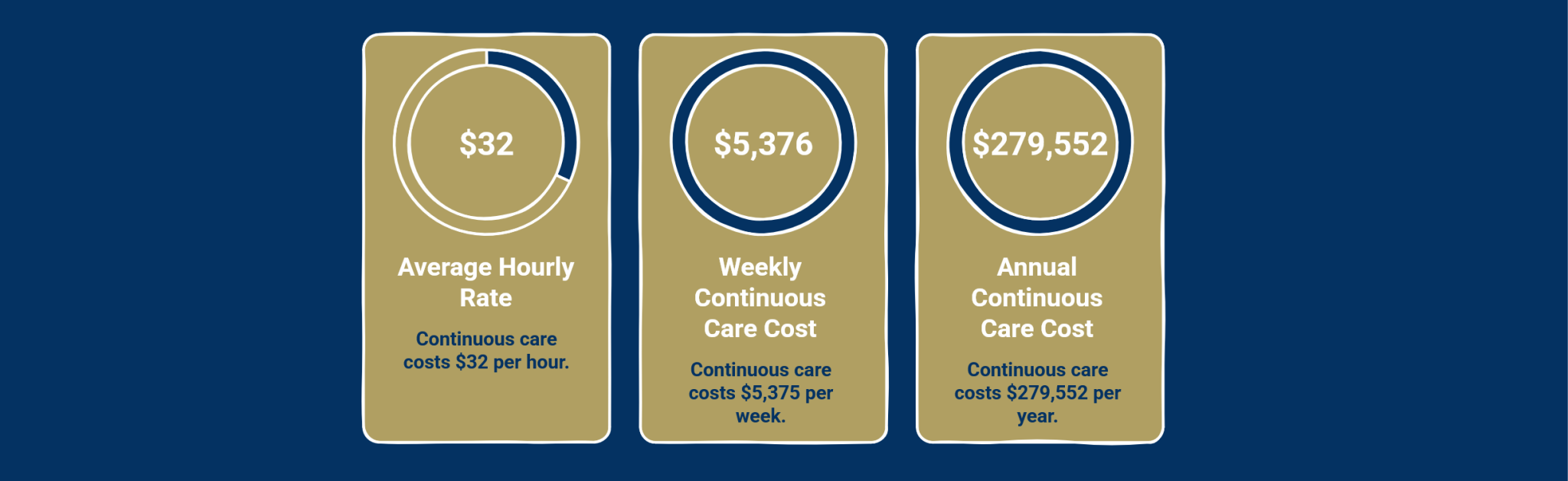
In 2026, professional attendant care for injuries such as traumatic brain injury or spinal cord trauma commonly requires agency level services. Depending on care needs, hourly rates often fall within the $27 to $36 range. At an average of $32 per hour, continuous care costs approximately $5,376 per week or about $279,552 per year.
Under Michigan law, insurers generally must reimburse no more than 56 hours per week for care provided by family members. If medical providers recommend round the clock supervision, the remaining hours typically must be filled by paid caregivers. Those additional hours are billed at market rates and count toward the policy’s PIP limit.
Example: First Year Care Costs After a Moderate Brain Injury
| Period | Care Need | Estimated Cost | Policy Effect |
|---|---|---|---|
| Hospital stay | Acute treatment | $150,000 | $100k remaining |
| Months 1 to 6 | 12 hrs daily care | $70,000 | $30k remaining |
| Months 7 to 12 | Continued care | $70,000 | Limit exceeded |
In this scenario, a $250,000 policy can be exhausted before the first year of recovery ends, and once that limit is reached, PIP medical benefits stop paying for additional treatment or care. In practice, long term recovery expenses are often more financially significant than the initial hospital stay, which means coverage levels that seem adequate when purchased may prove insufficient once ongoing care needs are fully calculated.
What Happens When PIP Runs Out?
When Michigan PIP benefits reach their limit, coverage does not gradually reduce. It stops. Understanding what happens next is important because the financial responsibility for care can shift quickly once that threshold is reached.
Step 1: The PIP limit is exhausted
After medical bills equal the selected coverage amount, the auto insurer is no longer required to pay additional PIP medical expenses. At that point, any ongoing treatment, therapy, or care must be paid through another source or out of pocket.
Step 2: Other insurance may step in
Health insurance, if available, may begin covering treatment. However, private health plans often have deductibles, copays, network restrictions, and limits on rehabilitation or long term care services, which can leave significant portions of care unpaid.
Step 3: Providers may bill the patient directly
If treatment is not fully covered by another insurer, the remaining balance can become the patient’s responsibility. This can include therapy, medications, medical equipment, or home care.
Step 4: A lien or reimbursement claim may arise
If another insurer pays accident-related medical bills, it may later seek repayment from any settlement or verdict obtained from the at fault driver. This process is commonly called subrogation, and it allows the insurer to recover what it paid for care.
Step 5: Financial pressure increases over time
Once PIP benefits end, ongoing recovery costs do not stop. The longer treatment continues, the greater the potential out of pocket exposure, especially when care involves therapy, medications, or daily assistance.
Expert Insight: Many drivers focus on how much coverage they have at the start of a claim. In practice, the more important question is what happens after that coverage runs out, because that is when financial risk typically becomes most significant.
Why Medical Inflation Makes Capped Policies Riskier Each Year
Michigan’s No Fault system includes a medical fee schedule that limits what providers may charge auto insurers for certain services, a framework established under MCL 500.3157 and tied in many cases to Medicare based formulas or percentage caps. While designed to control costs, this system operates alongside real world medical inflation, where hospital care, rehabilitation, medications, and skilled services tend to increase in price over time due to staffing shortages, technology expenses, and demand for specialized treatment.
For capped policies, this creates a compounding risk because coverage limits remain fixed while medical costs continue to rise. A $250,000 or $500,000 policy that appears substantial today may pay for significantly less care in future years, meaning the real value of that protection declines annually as treatment expenses increase.
Who Should Strongly Consider Unlimited Coverage
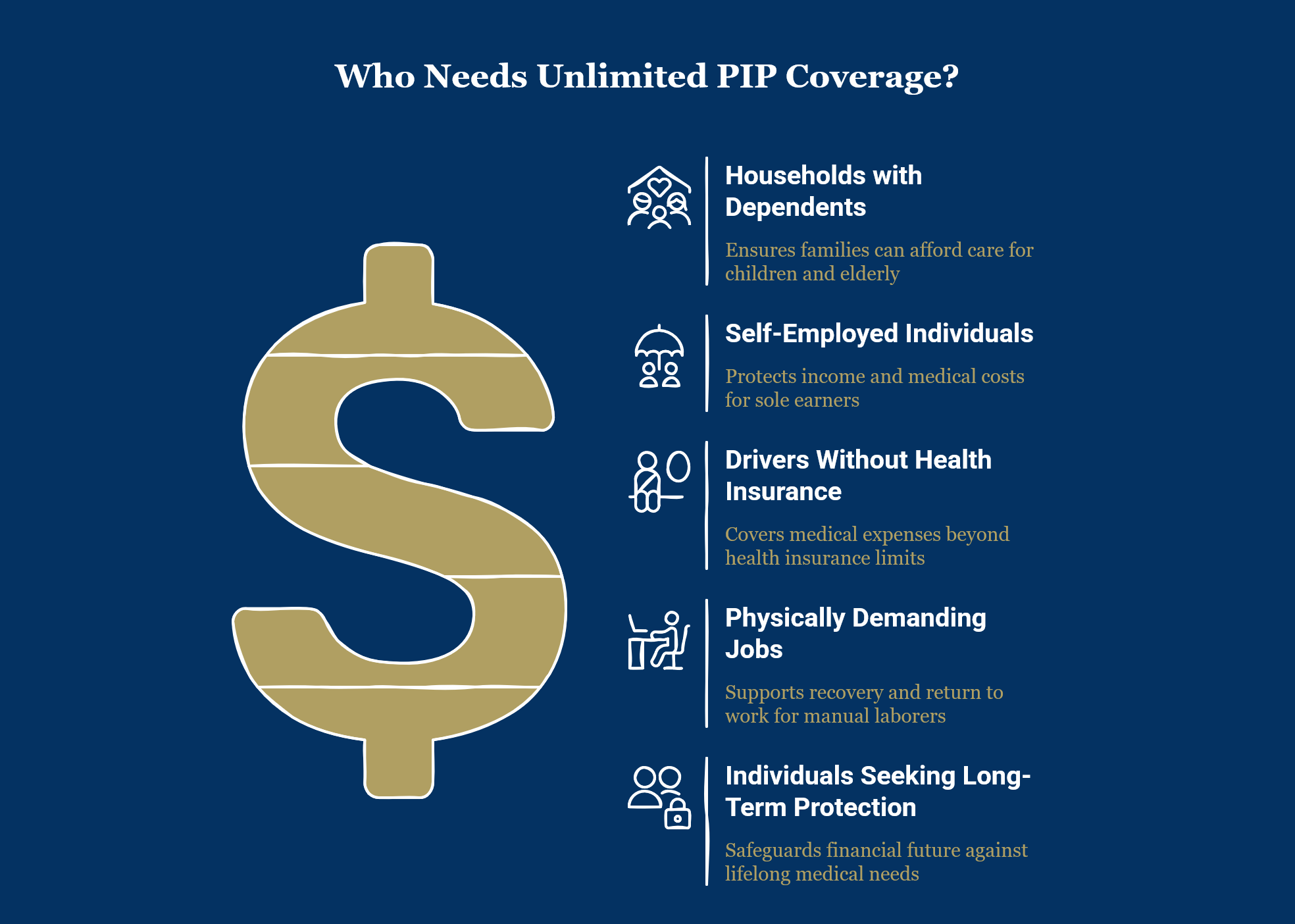
Certain drivers face greater financial risk if serious injuries occur, making higher PIP limits especially important to evaluate. The following groups are more likely to experience long term consequences if coverage runs out:
- Households with dependents — Ongoing care needs can affect not just the injured person but family stability and income.
- Self employed or sole earners — A serious injury can eliminate income while medical expenses continue.
- Drivers without strong health insurance — Limited health coverage may not replace lost PIP benefits.
- People with physically demanding jobs — Injuries may require extended rehabilitation before returning to work.
- Anyone seeking long term financial protection — Higher limits reduce the risk of paying medical costs out of pocket.
Choosing a coverage level is not only about premiums. It is about how much financial exposure you are willing to assume if a catastrophic injury occurs.
Capped vs. Unlimited: The Medical Cliff in Practice
The Medical Cliff is not a legal theory. It is the point at which an insurance policy’s medical limit is reached and payments stop even though treatment is still ongoing. In practical terms, it is the moment financial responsibility shifts from the insurer to the patient. The comparison below shows how capped and unlimited PIP policies typically respond to the same serious injury scenario in 2026.
| Feature | $250k or $500k Capped Policy | Unlimited PIP Policy |
|---|---|---|
| Hospital and ICU care | Limited. Early treatment can consume a large portion of benefits. | Covered according to the applicable fee schedule. |
| Rehabilitation | Covered until the dollar limit is reached. | Covered as long as treatment is medically necessary. |
| Long term home care | Stops when cap is reached. | Continues if prescribed by a physician. |
| Financial responsibility | May shift to patient or other payors. | Remains with auto insurer. |
| Coordination with health insurance | Secondary insurers may seek reimbursement. | Auto insurer generally remains primary payor. |
| Outcome | Coverage ends before recovery is complete. | Coverage lasts through recovery. |
In 2026, the cost of emergency transport and initial trauma care alone can consume a substantial portion of a capped policy, meaning a significant percentage of available benefits may be used within the first days of treatment. The Medical Cliff is determined by policy limits, not injury severity. Two people with identical injuries can face completely different financial outcomes depending solely on the coverage level selected.
Quick Self Check: Are You Protected?
You can verify your coverage level in less than a minute by reviewing your auto insurance declarations page. This document lists the exact PIP medical limit you selected when your policy was issued or renewed. Follow these steps:
- Find your declarations page — It is usually included with your policy documents or available through your insurer’s online account portal.
- Locate the PIP medical line — Look for a section labeled Personal Injury Protection, PIP Medical, or Medical Benefits.
- Check the coverage amount — If you see a dollar figure such as $250,000 or $500,000, your benefits are capped. If it says Unlimited, your medical coverage does not have a dollar limit.
Check Your Coverage Before You Need It
Reviewing your coverage takes only a minute, but it can determine how medical expenses are handled after a serious accident. Checking your declarations page now allows you to understand your level of protection before you ever need to rely on it, and drivers who want a clearer picture of how these situations unfold often explore their options for legal help after a serious crash in Michigan. Many people focus on premiums when selecting a policy, yet the more important question is whether their coverage would still protect them months or years into recovery. Taking time to confirm your limits today can help prevent difficult financial decisions later.