
Car accidents can cause a wide range of injuries, including whiplash, broken bones, traumatic brain injuries, spinal cord injuries, and internal organ damage. In Michigan, the severity of a crash injury can affect both the medical treatment required and whether an injured person may pursue compensation beyond no-fault insurance benefits.
Car accidents can place tremendous physical stress on the human body. During a collision, sudden deceleration, impact with vehicle structures, and rapid body movement can all cause injuries ranging from mild muscle strain to severe trauma affecting the brain, spine, or internal organs. The type and severity of injuries often depend on factors such as vehicle speed, the direction of impact, seatbelt use, and whether airbags deployed during the crash.
Understanding the most common injuries that occur in car accidents can help victims recognize symptoms and seek appropriate medical care. In Michigan, the severity of an injury may also influence how an insurance claim or legal case is evaluated, particularly when determining whether a person may pursue compensation beyond no-fault benefits.
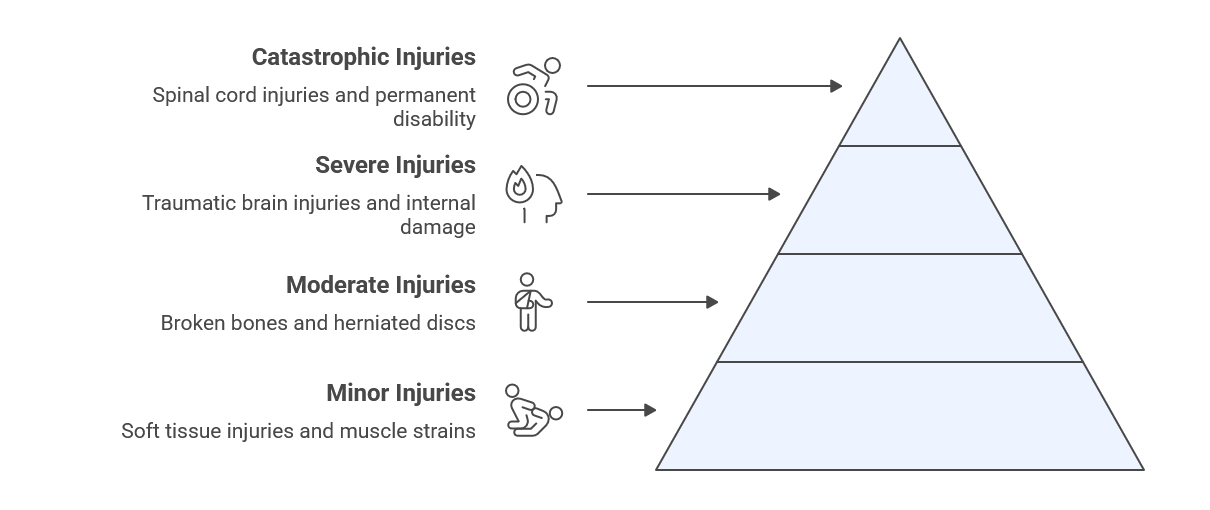
- Car accidents can cause injuries ranging from minor soft tissue damage to catastrophic trauma
- Head, spinal, and internal injuries are among the most serious crash-related injuries
- Whiplash and other soft tissue injuries are some of the most commonly reported after collisions
- Some injuries may not appear immediately and can develop hours or days after a crash
- The severity of an injury can affect medical treatment, recovery time, and legal compensation
Car accidents frequently result in physical injuries because the forces involved in a collision can place sudden stress on the body. The type of injury that occurs often depends on factors such as vehicle speed, the direction of impact, seatbelt use, and how occupants move during the crash. While some injuries are relatively mild and heal with time, others can cause severe trauma that requires extensive medical treatment and long-term rehabilitation.
📊 Table: Common Injuries Caused by Car Accidents
| Injury Type | Severity | How These Injuries Occur |
|---|---|---|
| Whiplash Injuries | Mild to Moderate | Neck snapping motion during rear-end crashes |
| Broken Bones & Fractures | Moderate to Severe | Impact with interior vehicle structures |
| Traumatic Brain Injuries | Severe | Head impact or violent brain movement |
| Spinal Cord Injuries | Catastrophic | Extreme force affecting the spine |
| Internal Injuries | Severe | Blunt force trauma during collision |
| Burn Injuries | Severe | Vehicle fires or exposure to hot surfaces |
| Soft Tissue Injuries | Mild to Moderate | Muscle and ligament strain from sudden movement |
Bottom line: Car accidents can produce a wide range of injuries, from relatively minor soft tissue strains to severe trauma affecting the brain, spine, or internal organs, and the seriousness of an injury often depends on the force and circumstances of the crash.
Serious Car Accident Injuries and Catastrophic Trauma
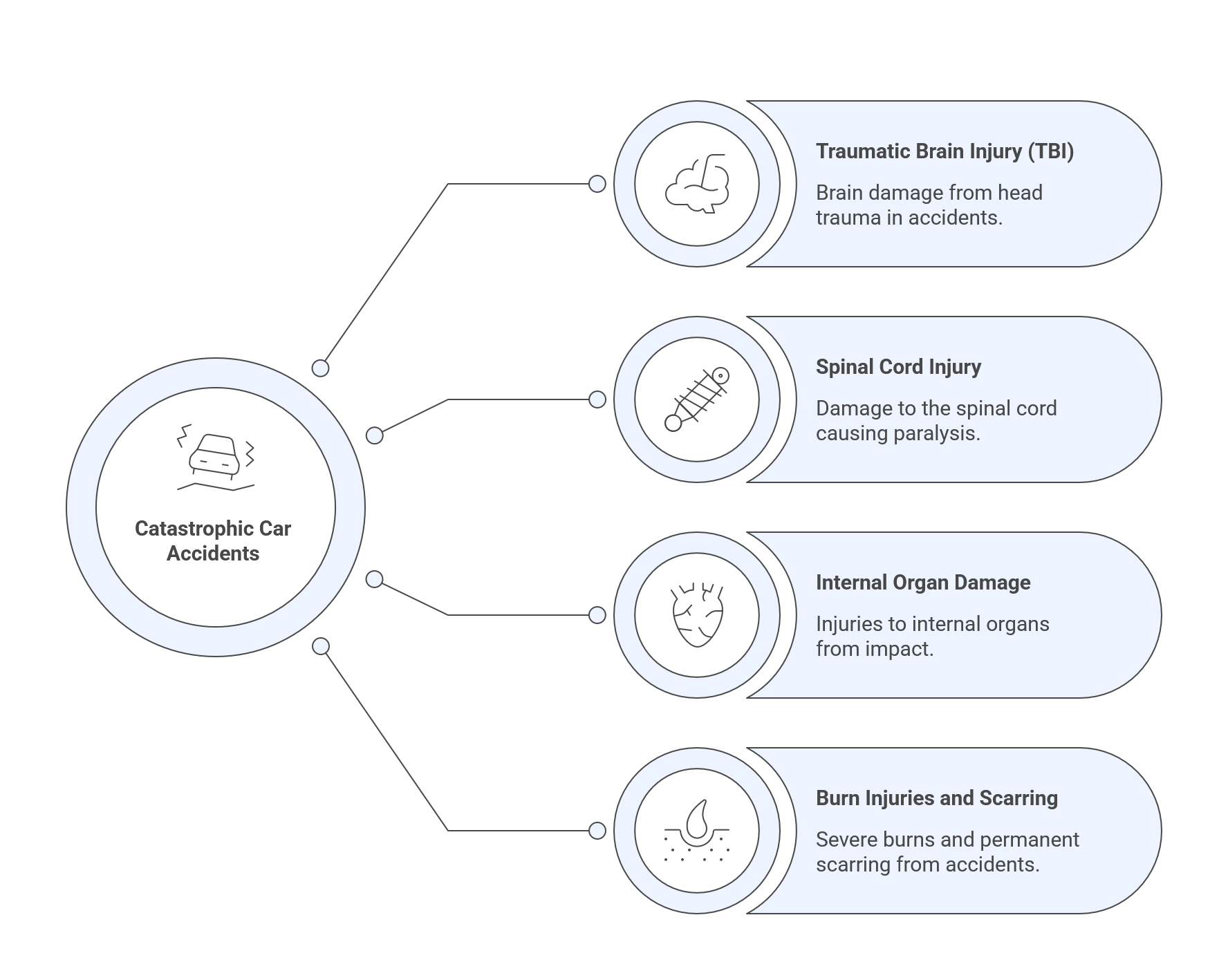
Some car accidents cause injuries that are considered severe or catastrophic because they may result in permanent disability, long-term medical care, or life-altering complications. These injuries often occur in high-speed collisions, rollovers, or crashes involving significant impact forces. When vital areas of the body such as the brain, spine, or internal organs are affected, victims may require extensive treatment, rehabilitation, and ongoing medical support.
Bottom line: Catastrophic car accident injuries can have lasting physical, emotional, and financial consequences, often requiring long-term medical treatment and significantly affecting a person’s quality of life.
Common Musculoskeletal Injuries After a Crash
Many injuries caused by car accidents affect the musculoskeletal system, which includes the bones, joints, muscles, and connective tissues that allow the body to move and function properly. The sudden forces involved in a collision can strain muscles, damage spinal discs, or fracture bones when occupants are thrown against seat belts, airbags, or interior vehicle surfaces.
Bottom line: Musculoskeletal injuries are among the most common crash-related injuries and can range from mild strains to serious conditions that require surgery or long-term rehabilitation.
When Car Accident Injuries May Appear
Not every injury becomes obvious immediately after a car accident. During a traumatic event, the body releases adrenaline and other stress hormones that can temporarily reduce pain and mask symptoms. As these effects fade, injuries that were not apparent at the scene may begin to appear hours or even days later.
Delayed symptoms are common after vehicle crashes and may include headaches, neck stiffness, dizziness, back pain, numbness, or reduced mobility. These symptoms can signal underlying injuries that were not initially noticeable, which is why medical evaluation after a collision is often recommended. Our page on delayed car accident injuries explains why symptoms sometimes appear after the initial shock of a crash.
Soft Tissue Injuries After a Car Accident
Soft tissue injuries are among the most frequently reported injuries after vehicle collisions. These injuries affect muscles, ligaments, and tendons rather than bones or internal organs, and they often occur when the body is suddenly forced forward or sideways during impact.
Because soft tissue damage may involve microscopic tearing or inflammation rather than visible trauma, symptoms can include soreness, stiffness, swelling, and limited mobility. Our page on soft tissue injuries after a car accident explains how these injuries occur and why they are so common in vehicle crashes.
Recovery and Medical Treatment After a Crash
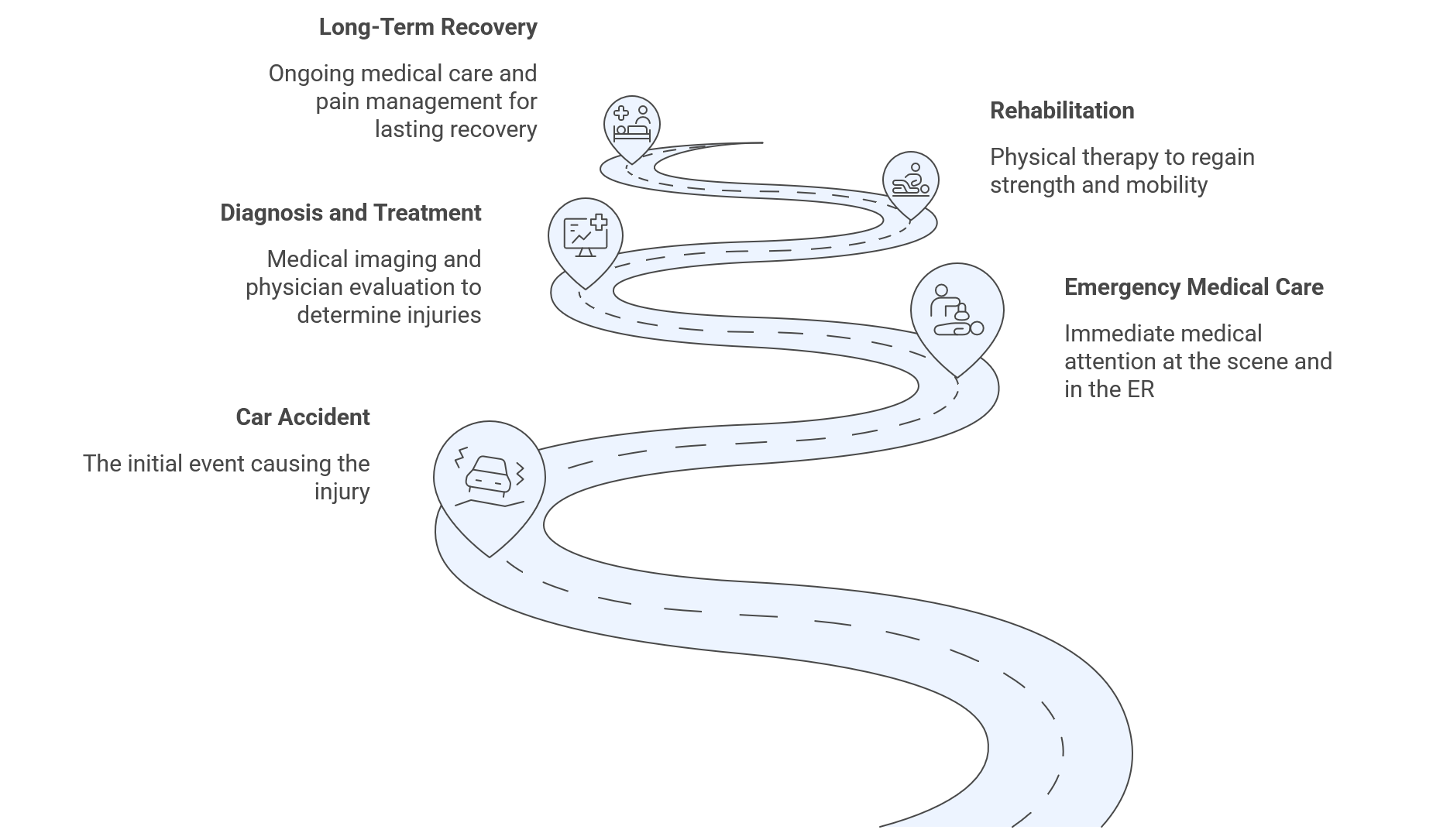
Recovering from a car accident injury often requires more than initial medical care at the scene or emergency room. Many crash-related injuries require follow-up treatment to restore strength, mobility, and normal physical function, particularly when muscles, joints, or connective tissues are affected. In many cases, physical therapy after a car accident plays an important role in rehabilitation by helping patients improve flexibility, rebuild strength, and regain range of motion during the recovery process.
Special Circumstances and High-Risk Injury Situations
Some car accidents involve additional medical risks depending on the health condition of the person involved in the crash. For example, injuries sustained during pregnancy can raise unique concerns for both the mother and the unborn child, which is why medical evaluation is typically recommended even after relatively minor collisions. Our page on car accidents while pregnant explains the potential risks and the precautions that may be necessary following a crash.
How Injury Severity Can Affect a Car Accident Claim
The severity of a car accident injury often plays a major role in how an injury claim is evaluated. Minor injuries may resolve within weeks, while more serious trauma can require months or years of treatment and rehabilitation. As injury severity increases, medical costs, recovery time, and the potential long-term impact on a person’s health and ability to work can all influence the overall value of a claim.
📊 Table: Injury Severity and Recovery Impact
| Injury Type | Typical Recovery | Long-Term Impact |
|---|---|---|
| Whiplash | Weeks to months | Chronic neck pain |
| Broken Bones | 6–12 weeks | Reduced mobility |
| Herniated Disc | Months | Chronic nerve pain |
| Traumatic Brain Injury | Months to years | Cognitive impairment |
| Spinal Cord Injury | Permanent | Paralysis |
| Internal Injuries | Weeks to months | Organ complications |
| Severe Burns | Months to years | Permanent scarring |
Bottom line: As injury severity increases, medical expenses, recovery time, and long-term complications often become more significant factors in a car accident claim.
Why Injury Type Matters in a Michigan Car Accident Claim
The type and severity of an injury can play a critical role in determining whether an injured person may pursue compensation beyond Michigan’s no-fault insurance benefits. Under Michigan law, a person generally must show that their injuries meet the legal threshold of a serious impairment of body function in order to pursue pain and suffering damages from the at-fault driver. Because of this rule, the medical nature of an injury, how it affects daily life, and whether it causes long-term limitations can all influence whether a lawsuit may proceed.
Medical documentation is also essential in car accident claims involving significant injuries. Diagnostic imaging, physician evaluations, treatment records, and rehabilitation notes help establish both the severity of the injury and how it affects a person’s normal activities. When injuries involve long-term disability, chronic pain, or permanent impairment, those factors may substantially influence the damages that may be pursued in a Michigan car accident case.
Explore Related Michigan Car Accident Guides
These guides explain how Michigan car accident cases are handled, including the legal process, crash types, insurance rules, and how compensation is calculated.
Michigan Car Accident Legal Process
Learn how accident claims move from investigation through negotiation, litigation, and possible trial.
Common Types of Car Accidents in Michigan
See how different crash scenarios affect fault, liability, and injury claims.
Michigan Car Accident Claims and Compensation
Learn how damages are evaluated and what factors influence the value of an injury claim.
Michigan Car Accident Insurance and No-Fault Guide
Understand how Michigan no-fault insurance works and which coverage may apply after a crash.
Frequently Asked Questions
What injuries qualify for pain and suffering in Michigan?
Michigan law allows injured drivers to pursue pain and suffering compensation when a crash causes a serious impairment of body function. This typically means the injury significantly affects a person’s ability to live their normal life. Examples may include traumatic brain injuries, spinal injuries, broken bones requiring surgery, or other conditions that cause long-term limitations.
Can delayed injuries still qualify for compensation?
Yes. Some car accident injuries do not appear immediately after a crash. Conditions such as soft tissue injuries, herniated discs, and traumatic brain injuries may develop symptoms hours or days later. As long as the injury is connected to the accident and properly documented through medical treatment, it may still qualify as part of a car accident claim.
What is considered a serious impairment of body function?
A serious impairment of body function is a legal standard under Michigan law that allows an injured person to seek pain and suffering damages. Courts generally evaluate whether the injury affects an important body function and whether it has a significant impact on the person’s normal life. This determination often depends on medical records, treatment history, and how the injury limits daily activities.
Get a Free Consultation After a Michigan Car Accident
The type and severity of injuries sustained in a crash can significantly affect how a car accident claim is evaluated. Medical treatment, recovery time, long-term complications, and the overall impact on a person’s daily life are all factors that may influence potential compensation after a serious accident.
At The Clark Law Office, injury cases receive direct attorney attention from start to finish. Every case is evaluated based on the medical evidence, the circumstances of the crash, and the available insurance coverage. A careful review early in the process can help identify important issues that may affect the outcome of a claim.
If you were injured in a crash and have questions about your legal options, speaking with a Michigan car accident injury lawyer can help you better understand your rights and the next steps after an accident. Contact The Clark Law Office to schedule a free consultation and discuss your situation.

Attorney Review
Legally reviewed by
Matthew R. Clark focuses exclusively on personal injury and wrongful death cases throughout Mid-Michigan. He graduated from Michigan State University College of Law and trained at The Geoffrey Fieger Trial Practice Institute. His practice includes serious car accident, no-fault insurance, and catastrophic injury claims, and he has recovered millions for injured clients while providing direct attorney-level representation from start to finish.