After a car accident in Michigan, what you do next can directly affect your medical coverage, insurance benefits, and legal rights. The decisions made in the first minutes, the first 24 hours, the first week, and even the first 30 days can determine whether you preserve access to No-Fault benefits and protect your ability to pursue compensation from the at-fault driver.
Because Michigan’s No-Fault system includes strict reporting requirements and legal deadlines, timing matters. This guide provides a clear, phase-by-phase roadmap explaining what to do immediately after a crash, what must be handled in the days and weeks that follow, and which longer-term deadlines can impact your rights.
Quick Answer: After a car accident in Michigan, check for injuries, call 911 if anyone is hurt, move vehicles to safety if possible, report the crash when required, exchange insurance information, and document the scene. Within the next 24 hours, seek medical evaluation and notify your insurer to open a claim. In the weeks and months that follow, protect your rights by preserving records, filing your No-Fault application within one year, and bringing any lawsuit within three years.
The actions you take after a crash are time-sensitive. Michigan law imposes specific reporting requirements, insurance obligations, and legal deadlines that apply at different stages following an accident:
Failing to act within the correct timeframe can limit or permanently bar certain claims, making it essential to understand each phase below.
Immediately After the Crash
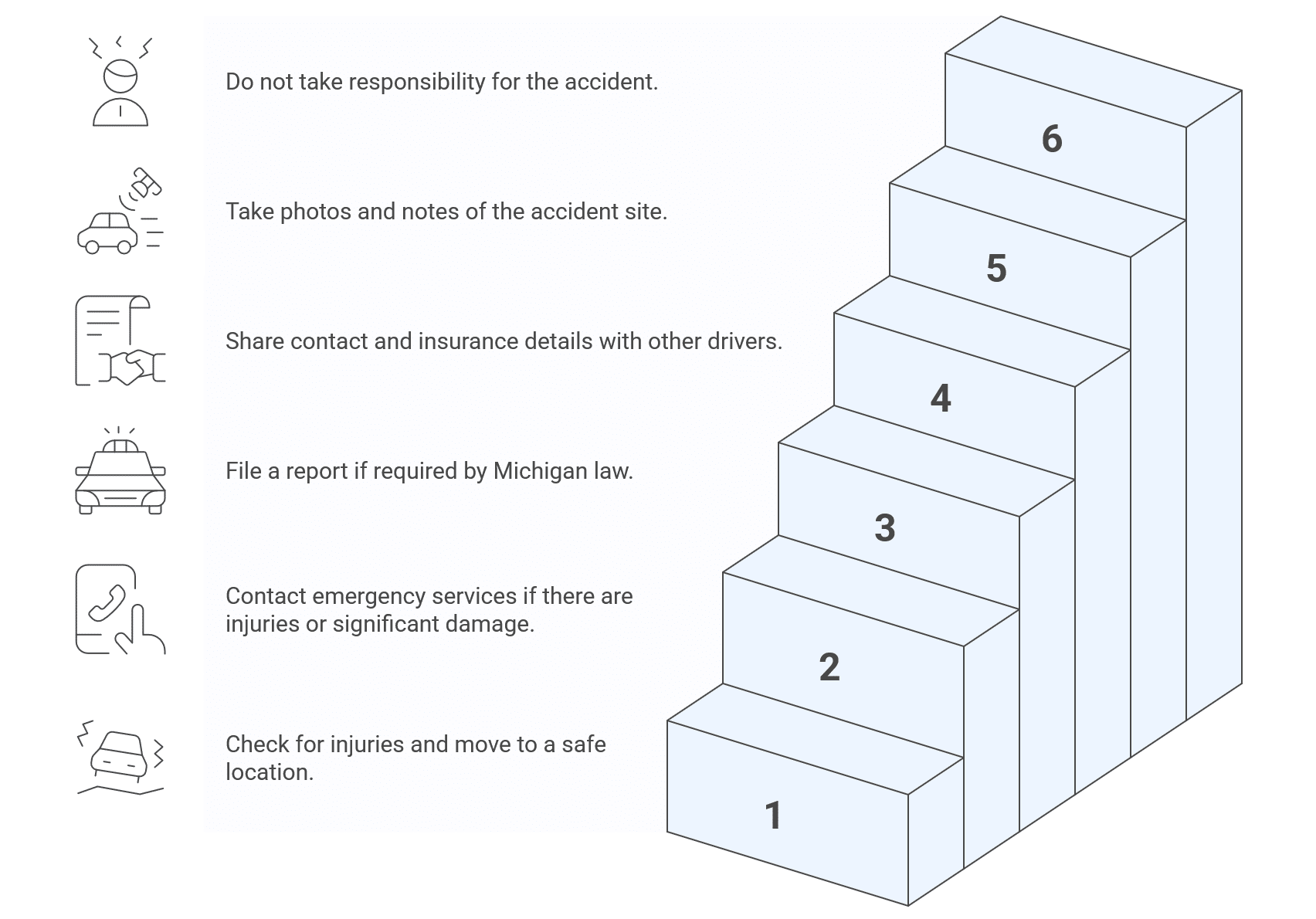
What To Do Now: Check for injuries and call 911 if anyone is hurt. Report the crash if it involves injuries, significant damage, or vehicles that cannot be safely driven. Exchange identifying and insurance information with all drivers, photograph the scene before anything is moved, and avoid making statements that could be interpreted as admitting fault.
Check for Injuries and Call 911
Assess yourself and your passengers for injuries and call 911 immediately if anyone is hurt. If vehicles are creating a traffic hazard and it is safe to move them, relocate to the shoulder and activate hazard lights to reduce the risk of secondary collisions. Emergency responders can evaluate injuries and create an official record of the incident.
Report the Crash When Required Under Michigan Law
Michigan law requires drivers to report a crash involving injury, death, or vehicle damage exceeding $1,000 under MCL 257.622. When law enforcement responds, officers prepare a traffic crash report documenting statements, insurance information, and scene observations. If you are unsure whether a police report is required after a crash, understanding when law enforcement must respond can help clarify your reporting obligations. Provide factual information and avoid speculating about speed, distance, or fault.
Exchange Information and Identify Witnesses
Exchange names, driver’s license numbers, license plate numbers, and insurance details with all involved drivers before leaving the scene. Confirm the accuracy of the information and note the make, model, and color of each vehicle. If independent witnesses are present, obtain their contact information, as neutral accounts can become important if liability is later disputed.
Preserve Evidence at the Scene
Use your phone to photograph vehicle damage, debris patterns, skid marks, traffic signals, weather conditions, and the positions of the vehicles before anything is moved. Capture both close-up and wide-angle images to preserve context. Visual documentation created immediately after a crash often carries greater weight than recollections provided days later and may later help determine who is at fault in a car accident.
Avoid Admitting Fault
Do not apologize or make statements that could be interpreted as accepting responsibility for the crash. Even casual remarks may later be referenced during insurance evaluations or legal proceedings. Stick to objective descriptions when speaking with police or other drivers and allow fault to be determined based on evidence.
Within the First 24 Hours
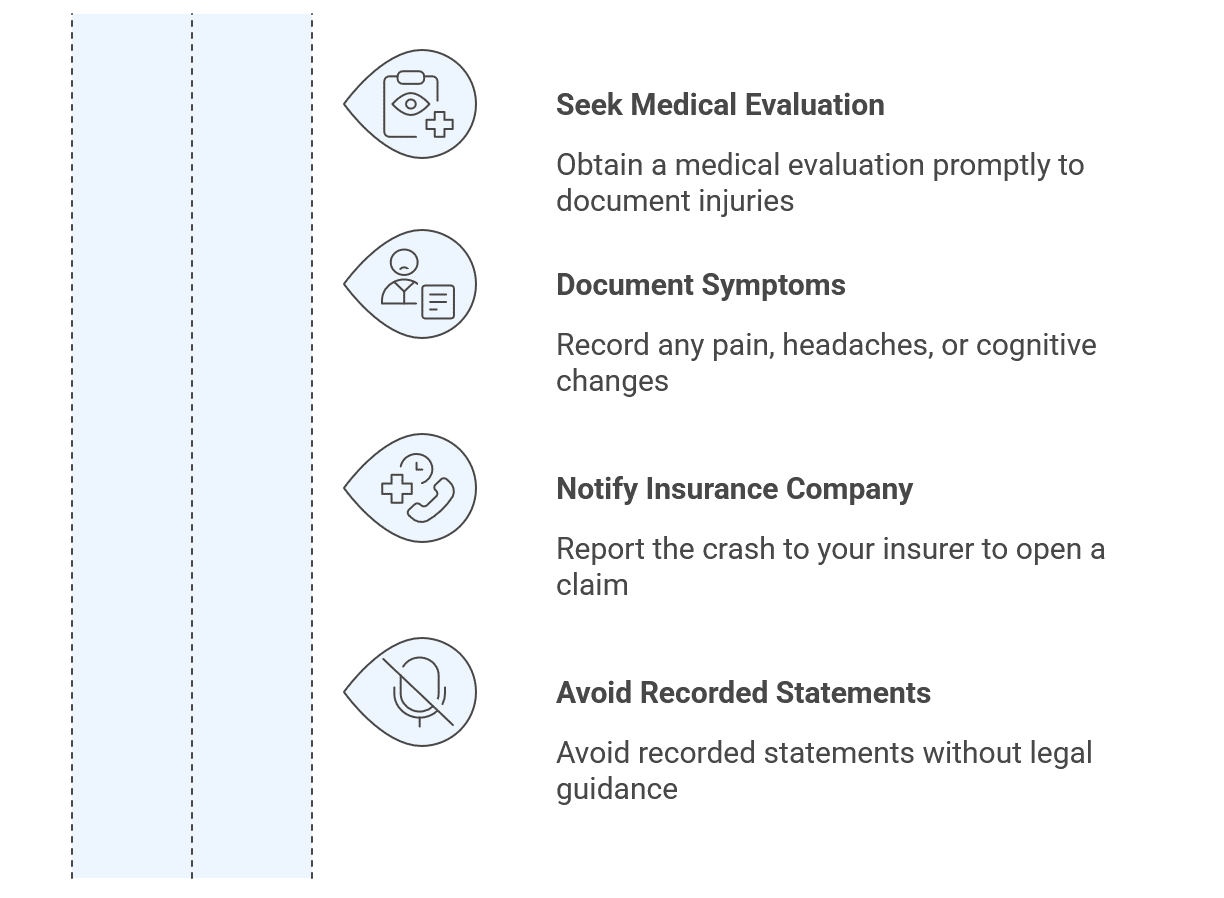
What To Do Now: Seek medical evaluation as soon as possible and ensure all symptoms are documented in your records. Notify your insurer to formally open your claim and begin activating No-Fault benefits. Avoid giving recorded statements before you fully understand your injuries and legal rights.
Seek Medical Evaluation Promptly
Even if you feel stable after the crash, obtain a medical evaluation as soon as possible. Adrenaline can mask symptoms of concussions, internal injuries, or soft tissue damage that may not appear immediately. Prompt examination creates documentation tying your condition to the collision and helps prevent complications from worsening.
Document All Symptoms
Record any pain, headaches, dizziness, stiffness, or cognitive changes you experience in the hours following the crash. Provide complete and accurate information to medical providers so your symptoms are reflected in your records. Inconsistent or delayed reporting can later be used to question the severity or origin of an injury.
Notify Your Own Insurance Company
Report the crash to your insurer to open a claim and begin activating coverage under your policy. In Michigan, this step is important because many accident-related expenses are paid through Personal Injury Protection (PIP) benefits, which can cover medical bills, wage loss, and certain replacement services after a crash. Provide basic factual details about the date, location, and vehicles involved without speculating about fault. Early notice helps prevent disputes about timeliness and ensures your benefits process starts properly.
Avoid Recorded Statements Without Legal Guidance
Insurance adjusters may request a recorded statement shortly after the crash. Statements given before injuries are fully understood can later be used to minimize or challenge a claim. Provide required notice of the incident, but avoid detailed recorded interviews until you understand your legal obligations and rights.
What To Do Now: Obtain and review the police report, confirm how your No-Fault coverage applies, track medical expenses and missed work, and organize all records related to the crash in one place.
Obtain the Police Report
Request a copy of the traffic crash report from the responding law enforcement agency or through the Michigan State Police system. Review it carefully for accuracy, including vehicle positions, witness statements, and insurance information. Errors in the report should be addressed promptly, as insurers often rely on it during claim evaluation.
Confirm How Your No-Fault Coverage Applies
Review your auto policy to understand the level of Personal Injury Protection coverage selected and how benefits apply to medical bills, wage loss, and replacement services. Coverage limits, deductibles, and coordination provisions can directly affect what expenses are paid. If there is uncertainty about priority or coverage, clarify it early to avoid delays.
Track Medical Bills and Wage Loss
Maintain a detailed record of medical appointments, prescriptions, mileage to treatment, and any work time missed due to injury. Wage verification and medical documentation are essential for benefit reimbursement. Incomplete records can slow payment or create disputes later in the claim process.
Begin Organized Recordkeeping
Create a dedicated file for police reports, medical records, insurance correspondence, repair estimates, and notes from conversations related to the crash. Keep copies of everything you submit to insurers. Organized documentation makes it easier to respond to requests and protects against misunderstandings as the claim progresses. Proper documentation also makes the process of filing an insurance claim after a Michigan car accident significantly easier if disputes arise later.
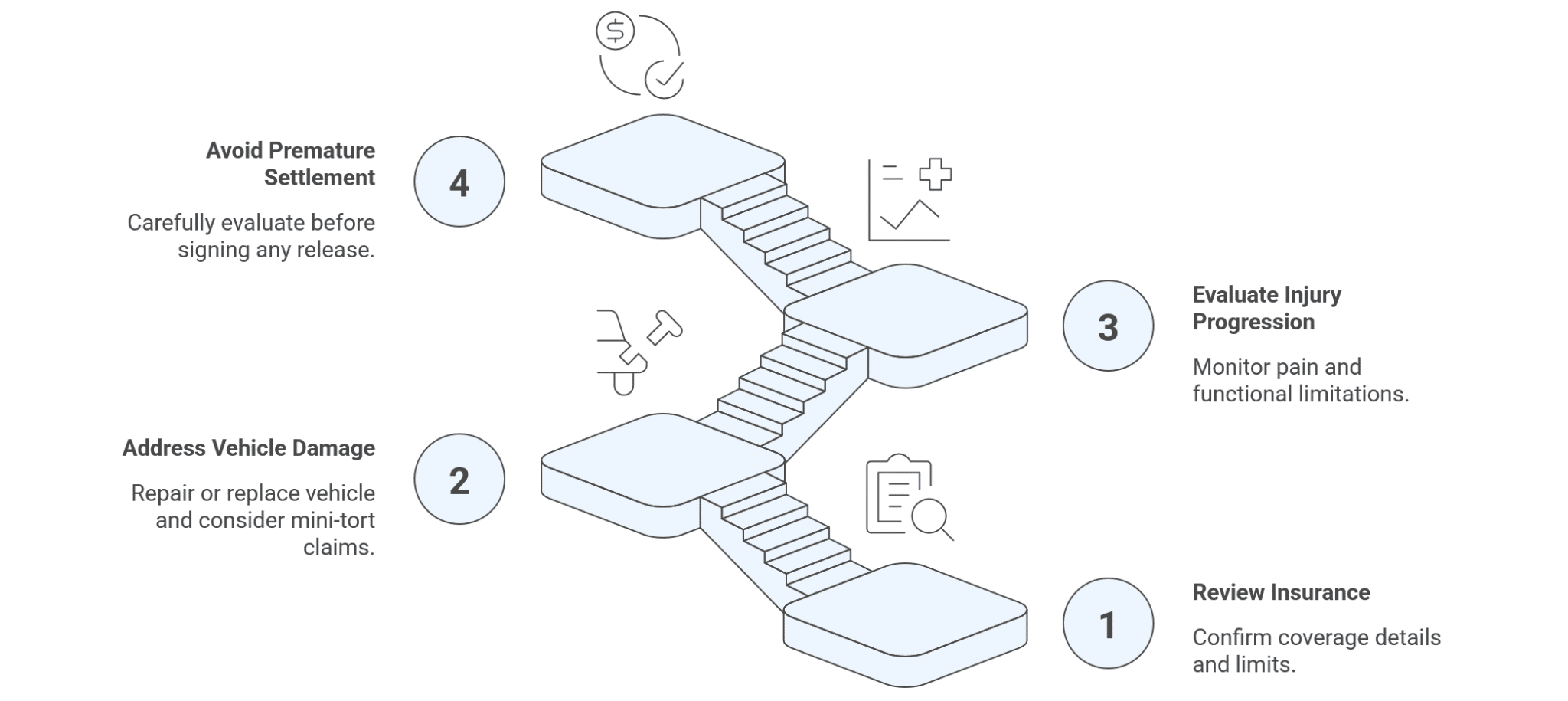
What To Do Now: Review your insurance coverage carefully, confirm how your PIP benefits apply, address vehicle damage and any mini-tort claims, and avoid accepting early settlement offers before the full extent of your injuries is known. Decisions made during this period can affect both short-term benefits and long-term recovery.
Review Your Insurance Coverage
Confirm the level of Personal Injury Protection coverage selected under your policy and whether medical benefits are unlimited or capped. Coverage elections directly affect how medical expenses are paid and whether excess exposure may arise. Understanding your limits early prevents surprises as treatment continues.
Address Vehicle Damage and Mini-Tort Claims
Work with your insurer to repair or replace your vehicle and determine whether a mini-tort claim against the at-fault driver is appropriate to recover out-of-pocket deductible costs. Property damage issues are often resolved quickly, but documentation should remain consistent with how the crash occurred. Inconsistent descriptions can later affect liability evaluations.
Evaluate Injury Progression
Some injuries become clearer only after days or weeks of treatment. Monitor changes in pain levels, functional limitations, and work restrictions, and ensure they are documented in medical records. The evolving nature of injuries can influence whether a claim later meets Michigan’s serious impairment threshold.
Avoid Premature Settlement Decisions
Insurance companies may attempt to resolve claims early, sometimes before the full medical picture is known. Accepting a settlement too quickly can limit your ability to recover additional compensation if complications develop. Careful evaluation is essential before signing any release.
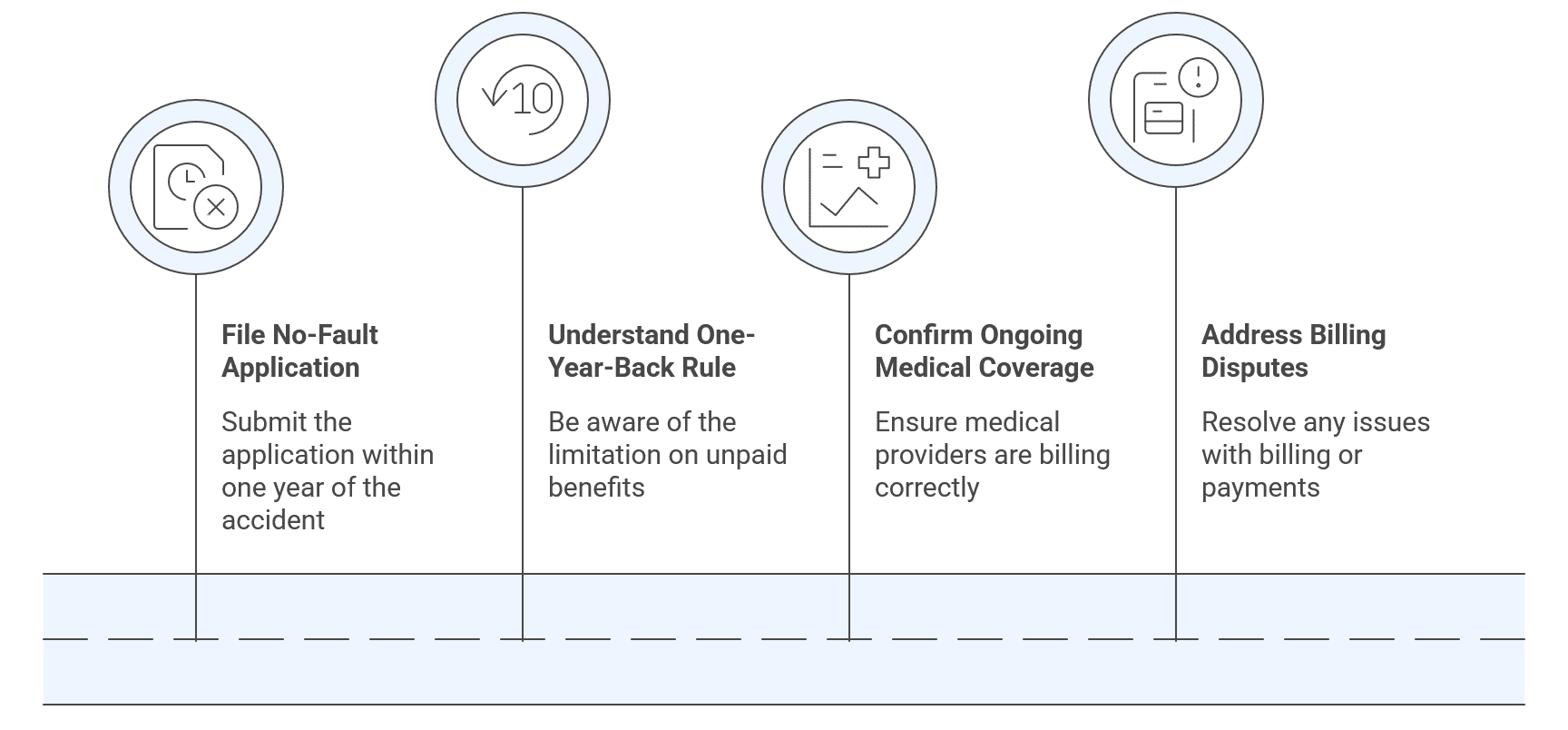
What To Do Now: File your No-Fault application within one year of the crash to preserve your right to medical and wage-loss benefits. Failing to submit the required application on time can permanently bar recovery of those benefits. Confirm that your claim has been formally opened and that required documentation has been received.
File Your No-Fault Application
Michigan law requires injured drivers or passengers to submit an application for No-Fault benefits within one year of the accident. This application activates medical coverage, wage-loss benefits, and other statutory protections. Missing this deadline can eliminate access to those benefits entirely.
Understand the One-Year-Back Rule
Even after a claim is opened, unpaid benefits are generally limited to expenses incurred within one year before a lawsuit is filed. Delays in submitting bills or pursuing unpaid benefits can reduce recoverable amounts. Ongoing attention to billing and documentation remains important throughout treatment.
Confirm Ongoing Medical Coverage
If treatment continues, verify that medical providers are billing correctly and that payments are being processed under your selected coverage level. Disputes over fee schedules, coordination of benefits, or priority issues should be addressed promptly. Gaps in payment can disrupt care and complicate the claim.
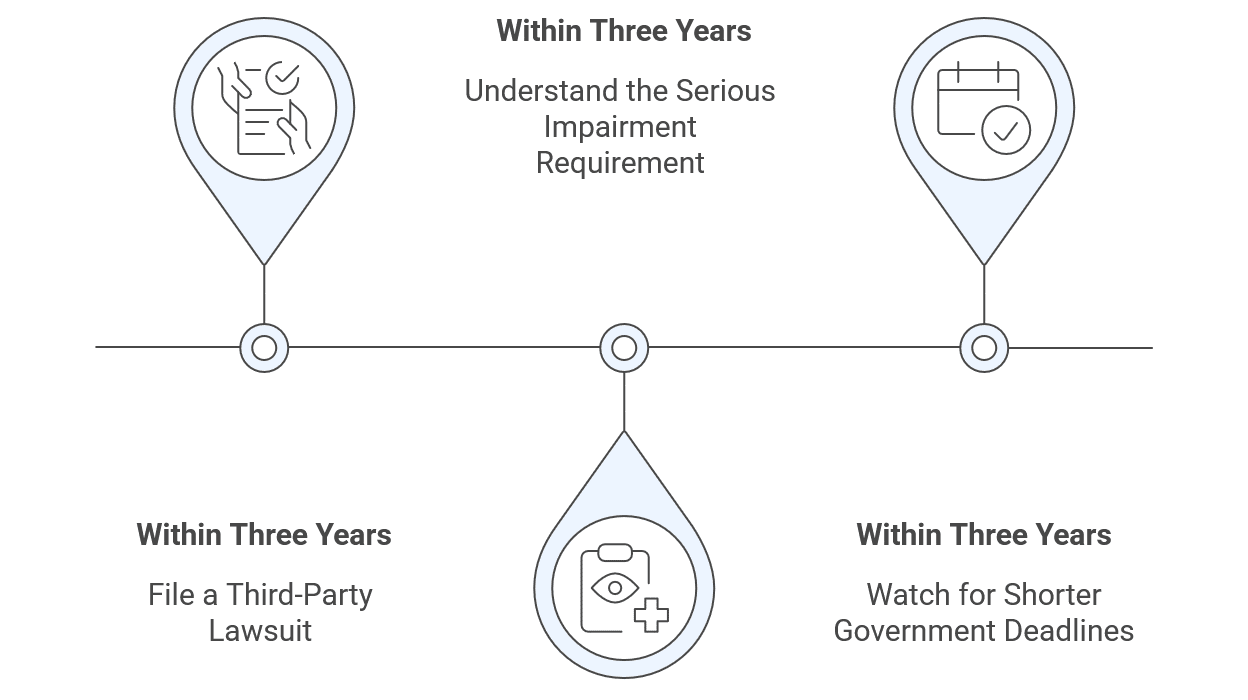
What To Do Now: File any lawsuit for pain and suffering or excess economic damages within three years of the crash. If this deadline passes, your claim may be permanently barred regardless of injury severity. Review potential third-party claims well before the statute expires to preserve your legal rights.
File a Third-Party Lawsuit for Pain and Suffering
In Michigan, you generally have three years from the date of the crash to file a lawsuit against the at-fault driver for non-economic damages such as pain and suffering, as well as certain excess economic losses. Waiting until the deadline approaches can create unnecessary risk if disputes over fault or injury severity arise. Timely evaluation ensures your claim remains viable and that you are prepared to prove negligence in a Michigan car accident claim if litigation becomes necessary.
Understand the Serious Impairment Requirement
To recover pain and suffering damages, your injury must meet Michigan’s serious impairment threshold. This legal standard focuses on whether the injury affects your ability to lead your normal life. Early documentation and consistent treatment can become important when this threshold is evaluated.
Watch for Shorter Government Deadlines
If a government vehicle or roadway condition contributed to the crash, shorter notice requirements may apply. Claims involving municipalities or state agencies often require early written notice before a lawsuit can proceed. These timelines can be significantly shorter than the standard three-year statute.
Michigan Car Accident Legal Deadlines
Certain rights after a crash are governed by statutory time limits under Michigan car accident laws. Missing these deadlines can permanently limit or eliminate your ability to recover benefits or pursue compensation.
When Can You Sue After a Michigan Car Accident?
Michigan’s No-Fault system limits when an injured person can file a lawsuit against the at-fault driver. Your own insurance generally pays medical expenses and wage loss benefits under MCL 500.3105, but you may pursue a lawsuit for pain and suffering only if your injury meets the serious impairment threshold set forth in MCL 500.3135. This standard focuses on whether the injury affects your general ability to lead your normal life, not just whether you experienced pain. Michigan also applies comparative negligence rules, meaning any compensation may be reduced if an injured person is partially responsible for the crash.
In most situations, a lawsuit must be filed within three years of the crash under MCL 600.5805(2). Missing that deadline will typically bar the claim, regardless of how serious the injury may be. Shorter notice requirements may apply when a government vehicle or roadway condition is involved, including statutory notice provisions under MCL 691.1404. These timing rules are part of the broader Michigan car accident legal process that governs how injury claims proceed after a crash.
Common Mistakes After a Michigan Car Accident
Even small missteps can limit recovery or delay benefits:
Bottom Line: Missed reports, delayed treatment, or overlooked deadlines can permanently limit your claim. Follow the timeline carefully.
Special Situations That Change the Timeline
Not every crash follows the standard timeline. Certain circumstances can shorten deadlines, shift insurance responsibility, or change how benefits are accessed. When these factors are present, the roadmap must be adjusted early.
Important: Special circumstances can shorten deadlines or change where claims must be filed. Confirm your obligations early.
Frequently Asked Questions
Protect Your Rights After a Michigan Car Accident
Following the correct steps after a crash protects more than your health. It protects your ability to recover medical benefits, wage loss, and potential pain and suffering compensation under Michigan law. If you are unsure whether your No-Fault application has been properly filed, whether your injuries meet the serious impairment threshold, or whether your legal deadlines have been protected, you should speak with a Michigan car accident lawyer before critical time limits expire.
Contact us today at 517-347-6900 for your free consultation. The sooner you act, the sooner we can begin protecting your rights and positioning your case for recovery.
Matthew R. Clark is a Michigan personal injury attorney and founder of The Clark Law Office. A graduate of Michigan State University College of Law and The Geoffrey Fieger Trial Practice Institute, he focuses exclusively on serious injury and wrongful death cases throughout Mid-Michigan. He has recovered millions of dollars for injured clients and is recognized for providing direct, attorney-level representation from start to finish.