
Michigan uses a no-fault insurance system after car accidents, meaning injured drivers and passengers typically receive medical benefits and wage loss coverage through their own insurance policy regardless of who caused the crash. In certain situations involving serious injuries, additional compensation may be available through third-party claims against the at-fault driver.
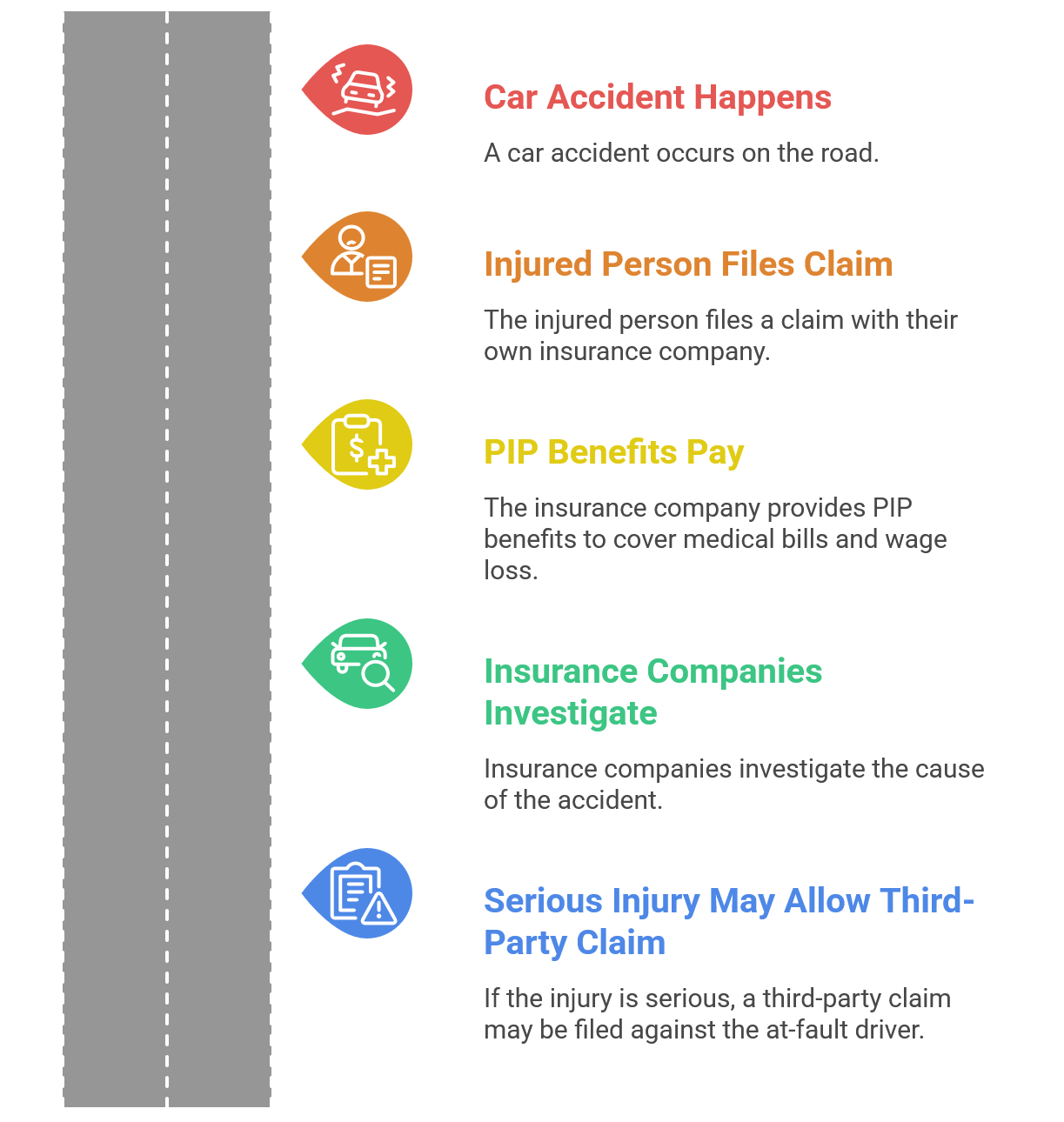
Michigan uses a unique no-fault insurance system for car accidents, which means injured drivers and passengers usually receive certain benefits through their own insurance policy rather than the at-fault driver’s insurer. These benefits are designed to cover medical treatment, wage loss, and other accident-related expenses so injured people can receive compensation quickly without waiting for liability to be determined.
Although no-fault insurance provides many immediate benefits, it does not prevent all lawsuits after a crash. When injuries meet Michigan’s legal threshold, accident victims may still pursue compensation from the at-fault driver through a separate liability claim. Understanding how these insurance rules interact is essential for anyone navigating a car accident claim in Michigan.
Key Takeaways
- Michigan uses a no-fault insurance system, so drivers usually file claims with their own insurer.
- PIP benefits may cover medical bills, lost wages, and replacement services.
- Third-party claims may be available when injuries meet Michigan’s legal threshold.
- Uninsured or underinsured motorist coverage may apply in some crashes.
- Insurance disputes sometimes arise in serious injury claims.
Michigan car accident claims often involve several different types of insurance coverage that may apply depending on the circumstances of the crash. Some coverages pay medical expenses and wage loss benefits, while others address vehicle damage or allow accident victims to pursue compensation from an at-fault driver. Understanding how these insurance protections work together can help clarify what benefits may be available after a crash.
Michigan Car Accident Insurance Coverage Overview
| Coverage Type | What It Covers | When It Applies |
|---|---|---|
| Personal Injury Protection (PIP) | Medical bills, wage loss, and replacement services | Paid through your own policy after most crashes |
| First-Party Insurance | Benefits provided by your own insurer regardless of fault | Applies immediately after an accident |
| Third-Party Claim | Compensation from the at-fault driver for certain damages | When injuries meet Michigan’s legal threshold |
| Mini-Tort | Limited vehicle damage recovery | When another driver is responsible for property damage |
| Uninsured / Underinsured Motorist Coverage | Protection when the at-fault driver lacks adequate insurance | Applies in crashes involving uninsured or underinsured drivers |
| PLPD Insurance | Liability protection for injuries or damage you cause to others | Required coverage for Michigan drivers |
Bottom Line: Multiple insurance coverages may apply after a Michigan car accident depending on the circumstances of the crash.
Who Pays Medical Bills After a Car Accident in Michigan?
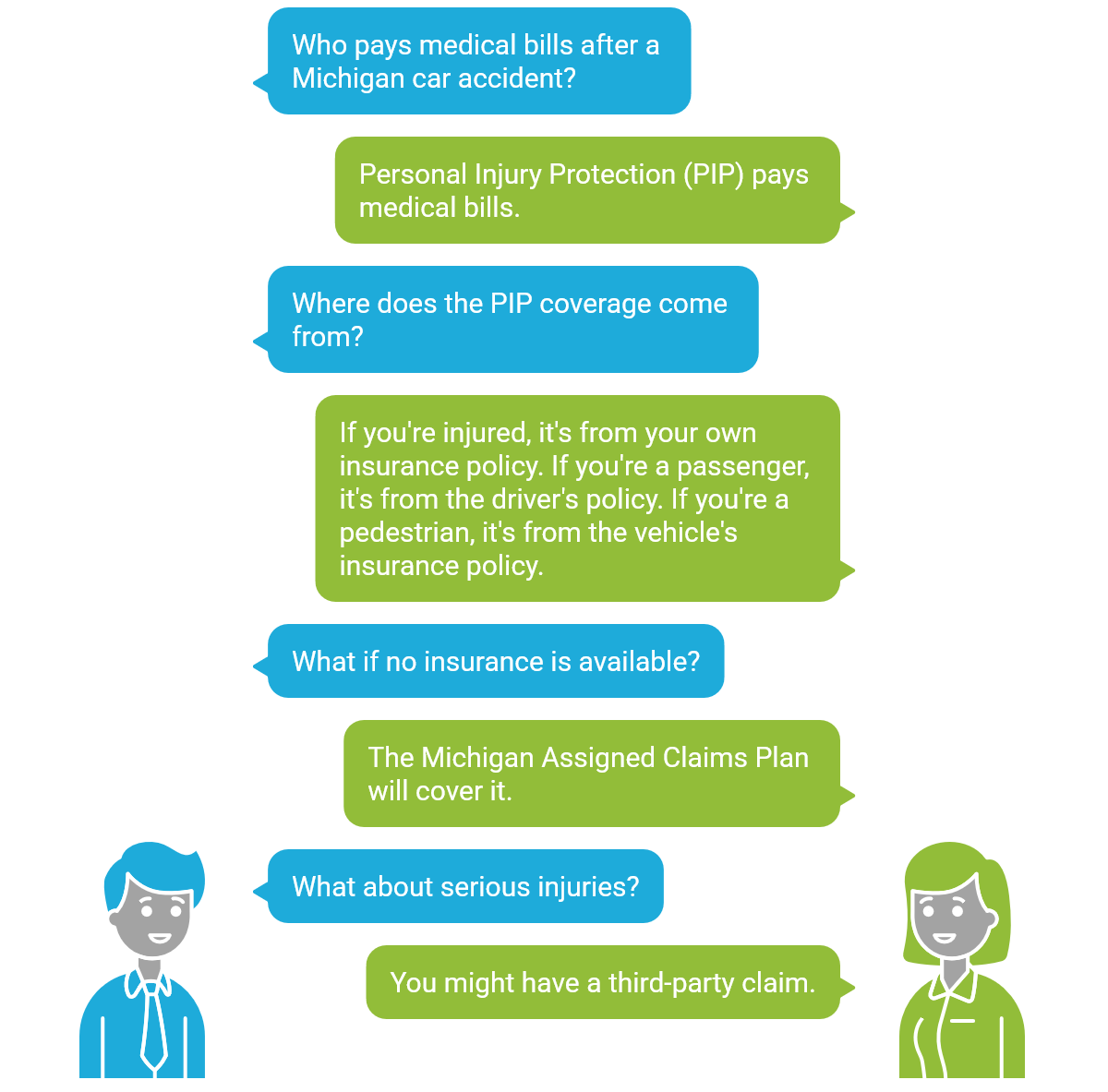
After a car accident in Michigan, medical bills are usually paid through Personal Injury Protection (PIP) benefits, which are part of the state’s no-fault insurance system. These benefits typically come from the injured person’s own insurance policy and may cover medical treatment, rehabilitation, and certain related expenses regardless of who caused the crash. This structure is often referred to as Michigan’s first-party insurance system, where injured drivers and passengers seek benefits from their own insurer first.
Who Pays Medical Bills in Different Michigan Accident Scenarios
| Situation | Who Pays Medical Bills |
|---|---|
| Driver injured | Their own PIP insurance policy |
| Passenger injured | The driver’s PIP insurance policy |
| Pedestrian injured | The vehicle’s insurance policy |
| Uninsured driver injured | Michigan Assigned Claims Plan |
| Severe injury case | Possible third-party claim against the at-fault driver |
Bottom Line: In most Michigan car accidents, medical bills are paid through PIP benefits under the injured person’s own insurance policy, even if another driver caused the crash.
Do You Use Your Insurance If the Accident Was Not Your Fault?
In Michigan, drivers usually file a claim with their own insurance company after a car accident even if another driver caused the crash. This is because Michigan follows a no-fault insurance system that allows injured drivers and passengers to receive certain benefits quickly without waiting for liability to be determined.
After a Michigan crash, your insurance policy may cover:
- medical treatment through Personal Injury Protection (PIP) benefits
- lost wages if injuries prevent you from working
- replacement services such as help with household tasks
- rehabilitation or recovery expenses related to the injury
Although your own insurer typically pays these initial benefits, the at-fault driver may still be responsible for additional damages in serious injury cases. When injuries meet Michigan’s legal threshold, accident victims may pursue compensation through third-party claims in Michigan.
How Michigan No-Fault Insurance Works
Michigan follows a no-fault insurance system, which means injured drivers and passengers usually receive benefits through their own insurance policy after a crash. Our guide explaining Michigan’s no-fault insurance law provides a deeper look at the legal rules that govern this system.
A key part of this structure is Personal Injury Protection (PIP) benefits, which may pay medical expenses and lost income. Because these benefits typically come from the injured person’s insurer, the system is often described as Michigan’s first-party insurance framework.
When You Can Sue the At-Fault Driver
Although Michigan uses a no-fault insurance system, lawsuits are still allowed in certain situations after a car accident. While medical bills and wage loss benefits are typically paid through your own insurance policy, Michigan law allows injured victims to pursue additional compensation from the driver who caused the crash when specific legal conditions are met.
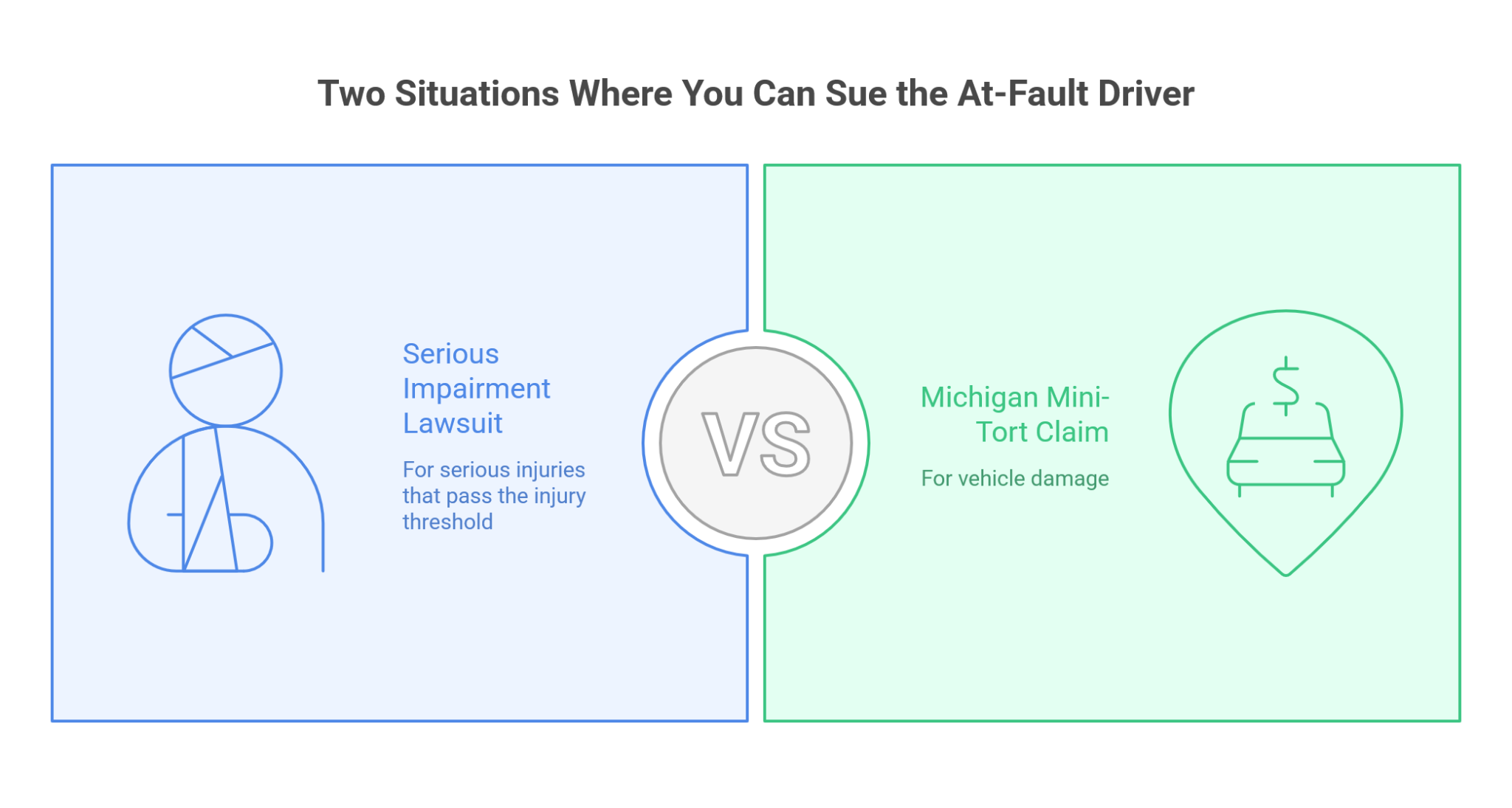
In most cases, a lawsuit is only possible when two requirements are satisfied: the injury must meet Michigan’s legal threshold and another driver must be responsible for causing the crash.
Your injuries must meet Michigan’s serious impairment threshold
Under Michigan law, an injured person may file a negligence lawsuit only if their injuries qualify as a serious impairment of body function. This requirement is established under MCL 500.3135, which allows accident victims to pursue damages beyond no-fault benefits when their injuries significantly affect their ability to lead a normal life.
The other driver must have caused the crash
A third-party claim also requires proof that another driver was legally responsible for the accident. Liability may be established through evidence such as police reports, witness statements, vehicle damage patterns, and other documentation showing how the collision occurred.
Claims are typically made against the driver’s insurance company
When a lawsuit is filed after a Michigan car accident, the claim is usually pursued against the at-fault driver’s liability insurance policy rather than directly against the driver personally. These cases are commonly referred to as third-party claims in Michigan, which allow injured victims to pursue compensation for damages such as pain and suffering.
Vehicle damage may be recovered through Michigan’s mini-tort law
Even when injuries do not meet the serious impairment threshold, Michigan law still allows limited recovery for vehicle damage when another driver is responsible for the crash. Under Michigan’s mini-tort law, drivers may pursue compensation for certain out-of-pocket vehicle repair costs that are not covered by their own insurance policy.
Types of Insurance Coverage That May Apply After a Crash
Several different types of insurance coverage may affect how compensation is recovered after a Michigan car accident. While Personal Injury Protection benefits typically cover medical expenses and wage loss through a driver’s own policy, other forms of insurance coverage may also apply depending on the circumstances of the crash.
Michigan Car Accident Insurance Coverage Types
| Coverage Type | What It Covers | When It Applies |
|---|---|---|
| Uninsured / Underinsured Motorist Coverage | Compensation when the at-fault driver has little or no insurance | When the responsible driver lacks sufficient liability coverage |
| Property Damage Liability (PLPD) | Damage a driver causes to another person’s vehicle or property | When the policyholder is responsible for the crash |
Bottom Line: In addition to no-fault benefits, other insurance coverage may determine how compensation is recovered after a Michigan car accident. Understanding the role of uninsured and under-insured motorist coverage and PLPD insurance can help clarify how financial responsibility is handled after a crash.
Special Insurance Situations After a Crash
Insurance coverage after a car accident can vary depending on who was involved in the crash and how they are connected to the vehicles or insurance policies. Michigan’s no-fault system uses a set of priority rules to determine which insurance company is responsible for paying benefits. These rules are established under MCL 500.3114, which governs the order of priority for Personal Injury Protection benefits after an accident.
Passengers, for example, typically receive Personal Injury Protection benefits through the driver’s insurance policy, although coverage may sometimes come from a household member’s policy or another applicable insurer depending on the circumstances. Our page explaining passenger injury claims after a Michigan car accident provides a deeper overview of how these priority rules determine which insurance company pays benefits.
What Happens If Insurance Denies Your Claim
Insurance claims are not always approved without dispute after a car accident. In some situations, an insurance company may question whether certain medical treatment is covered, dispute the extent of an injury, or argue that documentation is incomplete. Disagreements can also arise over policy coverage limits or which insurer is responsible under Michigan’s no-fault priority rules.
When this happens, resolving the issue often requires careful documentation of medical treatment, accident reports, and other supporting evidence. Understanding how insurance disputes are handled can help protect your right to benefits. Our guide explaining what to do when an insurance company denies your claim provides a more detailed overview of the steps that may be available if a claim is denied.
Explore Related Michigan Car Accident Guides
These pages explain the legal process, common crash types, major injuries, and compensation issues that often shape Michigan car accident claims.
Michigan Car Accident Legal Process
Learn how accident claims move from investigation through negotiation, litigation, and possible trial.
Common Types of Car Accidents in Michigan
See how different crash scenarios affect fault, liability, and injury claims.
Common Car Accident Injuries in Michigan
Understand the injuries most often involved in serious Michigan auto accident cases.
Michigan Car Accident Claims and Compensation
Learn how damages are calculated and what factors influence the value of a claim.
Frequently Asked Questions
Does no-fault insurance cover pain and suffering?
No. Michigan’s no-fault insurance system generally does not cover pain and suffering damages. Personal Injury Protection (PIP) benefits typically pay for medical expenses, wage loss, and certain services after a crash. Pain and suffering compensation may only be available through a claim against the at-fault driver when the injury meets Michigan’s serious impairment of body function threshold.
What happens when PIP benefits run out?
If Personal Injury Protection (PIP) benefits are exhausted, injured drivers may need to rely on other insurance coverage or pursue compensation from the at-fault driver. This can include a third-party claim for excess medical expenses that exceed the selected PIP policy limit. The availability of additional compensation often depends on the severity of the injuries and available insurance coverage.
Can you sue after a Michigan car accident?
In some situations, yes. Michigan law allows injured drivers to file a lawsuit against the at-fault driver when the crash causes death, permanent serious disfigurement, or a serious impairment of body function. These lawsuits typically seek compensation for pain and suffering and other losses not covered by no-fault benefits.
Who pays medical bills after a crash?
In most Michigan car accidents, your own insurance company pays medical bills through Personal Injury Protection (PIP) coverage regardless of who caused the crash. PIP benefits may cover hospital treatment, rehabilitation, and other medical expenses related to the injury. If medical costs exceed the selected PIP coverage limit, additional compensation may sometimes be pursued from the at-fault driver.
Get a Free Case Evaluation
Understanding how Michigan’s no-fault insurance system applies after a car accident can be complicated. Determining which insurance company must pay benefits and whether additional compensation may be available often depends on the specific facts of the crash and the injuries involved.
At The Clark Law Office, we help accident victims understand how insurance coverage applies to their situation. An experienced car accident attorney in Michigan can review accident reports, medical records, and available insurance policies to determine what benefits may be available and whether additional claims can be pursued.
If you have questions about insurance coverage after a crash, schedule a free consultation with The Clark Law Office to discuss your legal options and better understand how Michigan’s no-fault insurance laws may apply to your case.

Attorney Review
Legally reviewed by
Matthew R. Clark focuses exclusively on personal injury and wrongful death cases throughout Mid-Michigan. He graduated from Michigan State University College of Law and trained at The Geoffrey Fieger Trial Practice Institute. His practice includes serious car accident, no-fault insurance, and catastrophic injury claims, and he has recovered millions for injured clients while providing direct attorney-level representation from start to finish.