A herniated disc is a type of spinal injury where the soft inner portion of a disc pushes through its outer layer, often putting pressure on nearby nerves and causing pain, numbness, or weakness. According to the Mayo Clinic, this condition can cause pain, numbness, or weakness and may worsen over time without proper treatment.
Herniated discs are one of the most common and most serious spinal injuries caused by car accidents. While some cases improve with treatment, others can lead to chronic pain, nerve damage, and long-term limitations. These cases are often heavily disputed because insurance companies frequently argue the condition was pre-existing or not caused by the crash.
A herniated disc is a spinal injury that occurs when the soft inner material of a disc pushes through a tear in its outer layer. Spinal discs sit between the bones of the spine and act as cushions that absorb shock and allow the body to move normally.
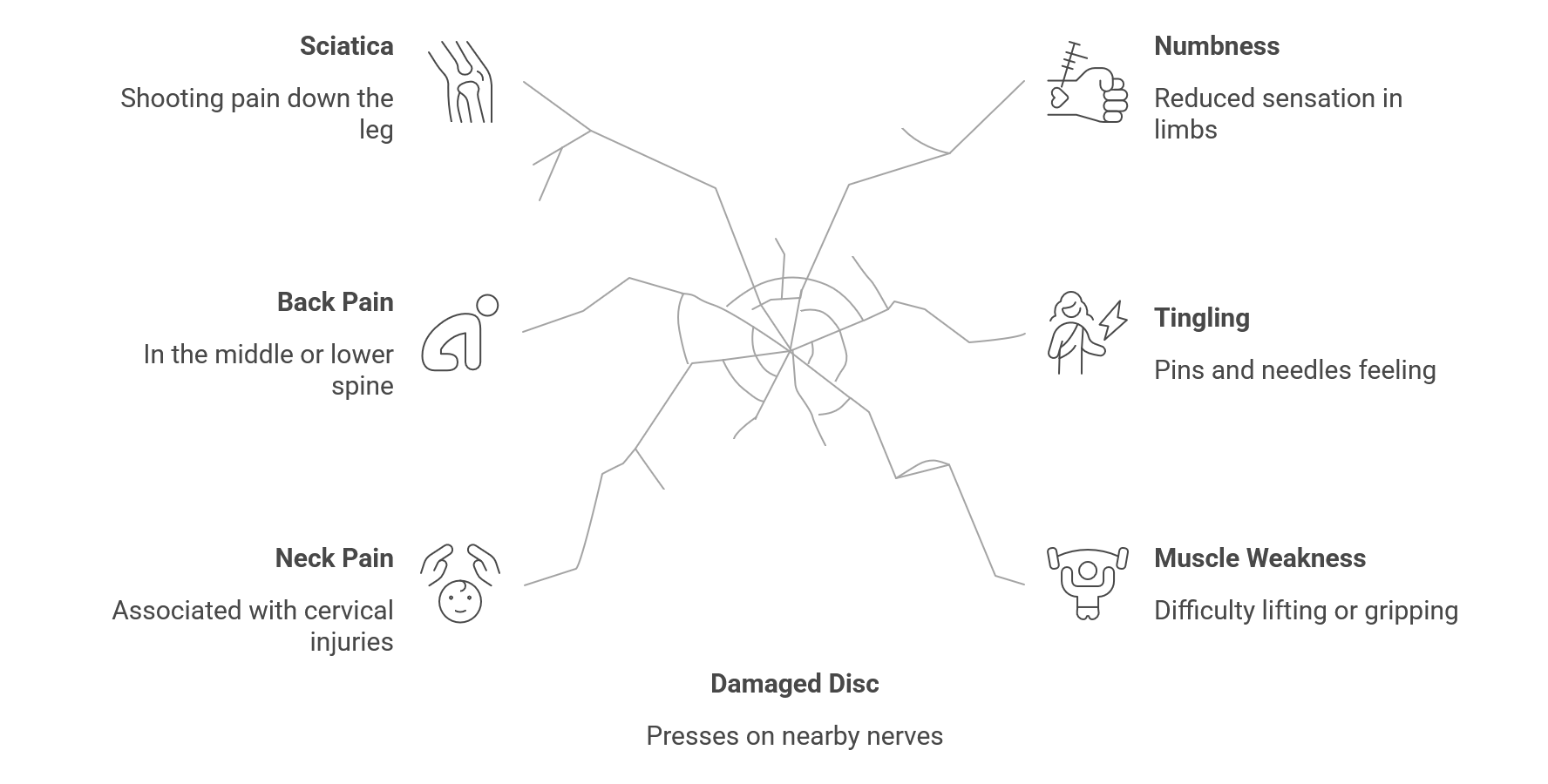
When a disc herniates, the inner material can press on nearby nerves. This pressure can cause pain, numbness, tingling, or weakness in the back, neck, arms, or legs depending on where the injury occurs.
Herniated discs are sometimes referred to as bulging, slipped, or ruptured discs, although these terms can describe different levels of damage.
Can a Car Accident Cause a Herniated Disc?
Yes. A car accident can cause a herniated disc when the force of a collision places sudden stress on the spine. During a crash, the body may be rapidly pushed forward, backward, or sideways, causing the discs to compress, twist, or tear.
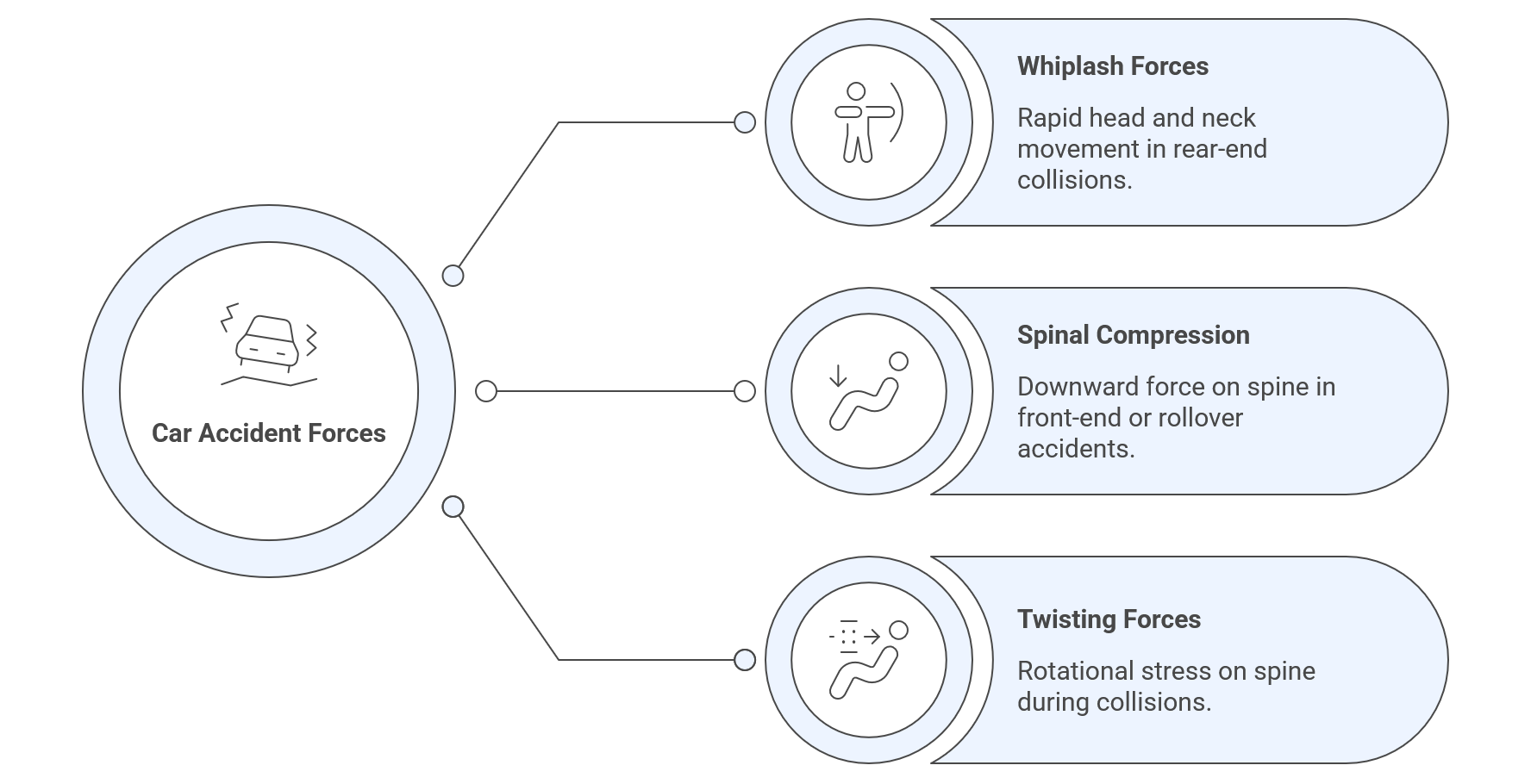
Several types of crash forces are commonly linked to disc injuries:
Whiplash forces often occur in rear end collisions when the head and neck snap forward and backward in a rapid motion. This movement can strain the cervical spine and may damage discs in the neck.
Spinal compression happens when the spine is forced downward by the impact of a crash. This type of force can occur in front end collisions or rollover accidents and may place significant pressure on discs in the lower back.
Twisting forces may occur when the body rotates during a collision, especially if the seatbelt restrains the torso while the spine continues to move. This rotational stress can strain spinal discs and surrounding ligaments.
These forces can occur in rear-end collisions, side-impact crashes, rollovers, and even lower-speed accidents.
Symptoms of a herniated disc do not always appear immediately. In many cases, pain, numbness, or weakness can develop hours or even days after the crash as inflammation builds and pressure on the nerves increases.
Bulging Disc vs Herniated Disc After a Car Accident
Spinal disc injuries are often described using terms like bulging disc, herniated disc, or ruptured disc. While these injuries affect the same part of the spinal cord, they involve different levels of damage and can impact both your symptoms and your injury claim.
A bulging disc involves outward pressure without a tear, while herniated and ruptured discs involve structural damage that can compress nerves and lead to more serious symptoms.
Common Symptoms of Disc Injuries After a Crash
Disc injuries from car accidents often affect the nerves in the neck or lower back. When a damaged disc presses on nearby nerves, it can cause pain and neurological symptoms that travel beyond the spine into the arms or legs.
Common symptoms of a herniated disc after a crash include:
Symptoms do not always appear right away and may worsen over time as inflammation increases and pressure on nearby nerves builds. When a herniated disc compresses a nerve, it can cause pain, numbness, tingling, or weakness that radiates beyond the spine into other parts of the body.
How Doctors Diagnose a Herniated Disc After a Car Accident
Diagnosing a herniated disc after a car accident typically involves a combination of physical evaluation and advanced imaging. Because disc injuries affect soft tissue and nerves, they often require more detailed testing than standard X-rays.
The most important diagnostic tools include:
Herniated discs cannot be seen on standard X-rays because they involve soft tissue rather than bone. Without proper imaging, these injuries may be overlooked or misunderstood in the early stages.
What sets herniated disc cases apart is that they can often be confirmed through MRI imaging. This objective medical evidence plays a critical role in both diagnosis and injury claims, especially when insurance companies argue the condition is minor, pre-existing, or unrelated to the crash.
Consistent medical documentation is equally important. Early diagnosis, follow-up care, and clear imaging help establish a direct connection between the accident and the injury, which can significantly strengthen your claim.
Treatment and Recovery for Herniated Disc Injuries
Treatment for herniated disc injuries after a car accident depends on the severity of the damage and whether nerves are being compressed. Many people improve with conservative care, while more serious cases may require surgery to relieve pressure on the spine.
Recovery timelines vary depending on the severity of the injury. Some herniated discs improve within weeks, while others require months of treatment or long-term care. When surgery is involved, recovery is often more extensive and can significantly affect your ability to work and perform daily activities. Most cases begin with non-surgical treatment, but injuries involving nerve compression or surgical intervention are typically more serious and often lead to higher-value claims, especially when compared to other conditions outlined in our car accident injury guide.
How a Herniated Disc Affects Your Car Accident Claim
A herniated disc can have a major impact on your car accident claim, but it is also one of the most commonly disputed injuries. Insurance companies often argue that the condition was pre-existing, caused by normal degeneration, or not related to the crash.
Because disc injuries involve soft tissue, insurers frequently try to minimize their severity unless there is clear medical evidence linking the injury to the accident. This is why diagnosis, timing, and documentation play such a critical role in these cases.
The strength of your claim often depends on:
More serious cases, especially those involving nerve compression, long-term limitations, or surgery, are typically more difficult for insurance companies to dispute and often result in higher-value claims. These types of injuries are often discussed more broadly in neck and back injuries after a car accident, where disc damage is just one of several serious spinal conditions.
Can a Herniated Disc Occur in a Minor Crash?
Yes. A herniated disc can occur even in a relatively minor car accident because spinal discs are vulnerable to sudden acceleration, deceleration, and twisting forces during a collision. Insurance companies sometimes argue that low speed crashes cannot cause serious spinal injuries, but medical research and clinical experience show that disc damage can occur when the neck or back absorbs rapid movement, even if the vehicle damage appears limited. What matters most is how the body moves during the impact and whether the force placed stress on the spinal discs and surrounding nerves.
Pre-Existing Disc Conditions and Car Accidents
Pre-existing disc conditions are extremely common, especially as people age. Many individuals have degeneration visible on imaging without any pain or symptoms.
In herniated disc cases, insurance companies often argue the injury was already there and not caused by the crash. In practice, this is one of the most common ways they try to reduce or deny claims.
What matters under Michigan law is not whether a condition existed before the accident, but whether the crash made it worse or caused new symptoms. This is known as the aggravation of a pre-existing condition, and it is a well-established legal principle.
To support this type of claim, the focus is on showing a clear before-and-after:
A pre-existing condition does not prevent recovery. If the accident made your condition worse, you may still be entitled to compensation.
How Michigan Law Applies to Herniated Disc Injury Claims
Michigan’s No-Fault system covers medical treatment and lost wages after a car accident, regardless of fault. However, recovering compensation beyond those benefits depends on how your injury is evaluated under Michigan law.
This framework is what determines whether a herniated disc claim stays within No-Fault benefits or becomes a higher-value injury case involving additional compensation.
When Disc Injuries Meet Michigan’s Serious Impairment Threshold
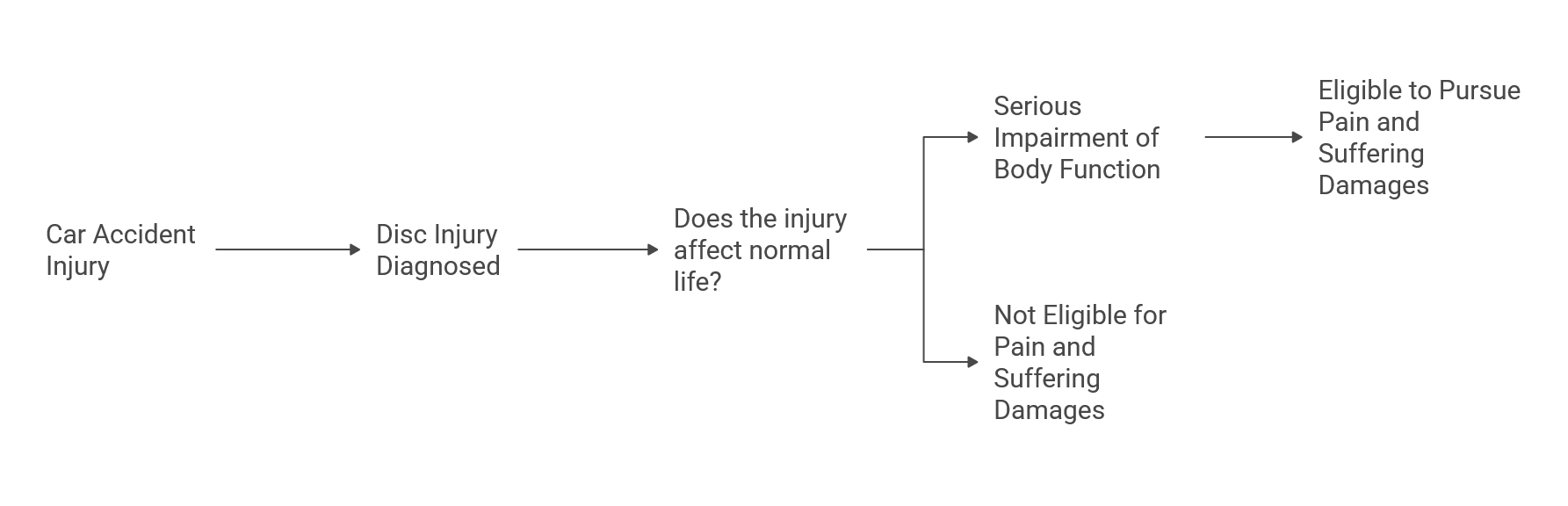
In Michigan, an injured person may only recover pain and suffering damages after a car accident if the injury meets the state’s serious impairment of body function standard under Michigan Compiled Laws §500.3135. A herniated or bulging disc can satisfy this threshold when the injury significantly affects a person’s ability to live their normal life, such as causing persistent pain, nerve compression, mobility limitations, or the need for surgical treatment. Severe spinal trauma can also involve spinal cord injuries, which almost always meet Michigan’s serious impairment standard due to their impact on movement, sensation, and daily functioning. Courts evaluate how the injury affects daily function, work activities, and the person’s ability to perform normal tasks when determining whether the legal threshold has been met.
Compensation for Disc Injuries After a Car Accident
A herniated disc can lead to significant financial and personal losses, especially when the injury requires ongoing treatment or affects your ability to work. In Michigan, compensation may include both economic damages and pain and suffering if the legal threshold is met.
The value of a herniated disc claim depends on factors such as the severity of the injury, the need for surgery, and how the condition affects your daily life. Cases involving nerve compression, long-term limitations, or surgical treatment are typically more complex and often result in higher compensation when properly documented.
What to Do After a Herniated Disc From a Car Accident
If you believe you have a herniated disc after a car accident, the steps you take early can directly affect both your recovery and your injury claim.
Taking the right steps early can make a significant difference in both your recovery and the outcome of your claim.
Frequently Asked Questions