
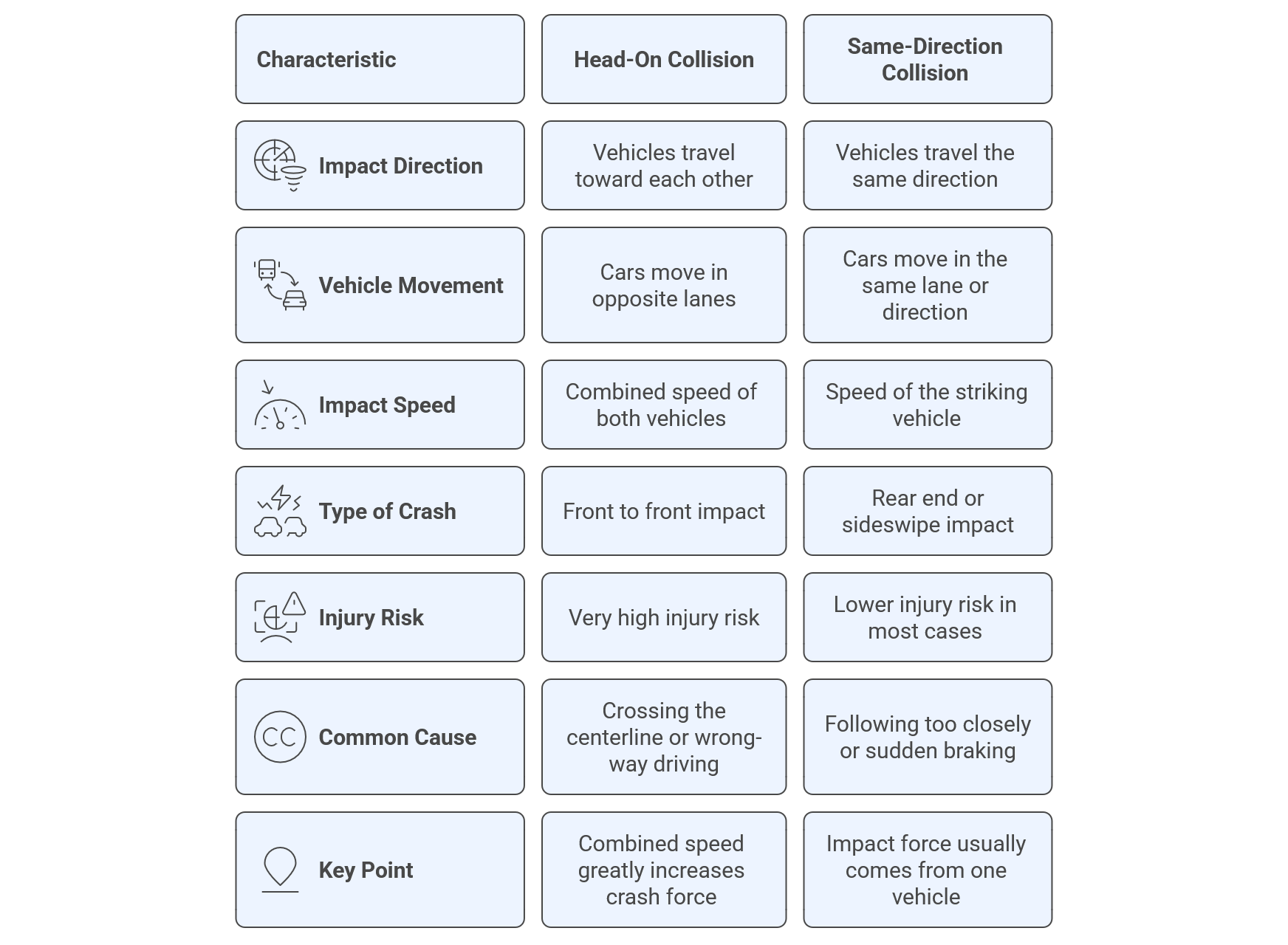
A head-on collision occurs when two vehicles traveling in opposite directions crash front-to-front, often resulting in severe injuries or fatalities. In Michigan, fault is usually assigned to the driver who crossed the centerline or entered oncoming traffic, although road conditions, vehicle defects, or shared negligence may also play a role. Victims may recover medical expenses through Michigan’s no-fault insurance system and may pursue additional compensation if their injuries meet the serious injury threshold.
A head-on collision is one of the most severe and deadly types of car accidents in Michigan. When two vehicles crash front-to-front, the force of impact can cause catastrophic injuries, lifelong disabilities, or even fatalities. If you or a loved one were hurt in a head-on crash, you may be facing overwhelming medical bills, lost income, and long-term pain and suffering. Understanding your rights and getting legal help after a Michigan car crash can make an important difference when dealing with insurance companies and pursuing compensation.
At The Clark Law Office, we fight for accident victims to get the maximum compensation they deserve. Unlike big law firms that treat you like just another case, we provide personalized legal representation. You work directly with an experienced attorney, not a case manager.
Key Takeaways
- Head-on crashes are highly dangerous. These collisions involve the combined speed of both vehicles, which significantly increases the likelihood of catastrophic injuries or fatalities.
- Fault usually involves crossing the centerline. Drivers who drift into oncoming traffic due to distraction, intoxication, fatigue, or unsafe passing are commonly found responsible.
- Michigan No-Fault still applies. Medical expenses and wage loss benefits may be paid through PIP insurance regardless of who caused the crash.
- Serious injuries may allow a lawsuit. Victims who suffer a serious impairment of body function may pursue additional compensation for pain and suffering from the at-fault driver.
Common Causes of Head-On Collisions
Head-on crashes often happen when one driver makes a critical mistake, such as veering into oncoming traffic or misjudging road conditions. In some cases, these collisions occur when a driver turns or enters traffic at an intersection and misjudges the speed or distance of an oncoming vehicle, creating conditions similar to certain intersection accidents. These crashes frequently result in severe injuries due to the combined force of both vehicles’ speeds. Some of the leading causes of head-on car accidents include:
| Cause | How It Leads to a Head-On Collision |
|---|---|
| Distracted Driving | A driver drifts into the opposite lane while texting or adjusting GPS. |
| Drunk or Drugged Driving | Impaired drivers lose control and cross into oncoming traffic. |
| Drowsy Driving | Fatigue causes drivers to swerve or fall asleep at the wheel. |
| Wrong-Way Driving | Drivers enter a highway or one-way street in the wrong direction. |
| Speeding on Curves | Losing control on a curve leads to crossing the center line. |
| Poor Weather Conditions | Slippery roads cause vehicles to slide into the opposite lane. |
| Improper Passing | Risky passing on two-lane roads can lead to a head-on crash. |
Who Is at Fault in a Head-On Crash?
Determining fault in a head-on collision is critical when pursuing compensation. In many cases, the driver who crosses into oncoming traffic is responsible, but liability is not always straightforward. Head-on crashes may result from a drunk driving accident, distracted driving, or other reckless behavior, while factors such as road conditions, vehicle defects, or shared negligence can further complicate fault determinations. The table below breaks down common head-on crash scenarios and who is typically considered at fault.
| Crash Scenario | Who Is Typically at Fault? | Key Liability Factors |
|---|---|---|
| Driver drifts into oncoming traffic | The driver who crossed the centerline | Distracted driving, fatigue, intoxication |
| Wrong-way driver on a one-way street | The driver going the wrong way | Ignoring road signs, intoxication |
| Improper passing on a two-lane road | The driver attempting an unsafe pass | Passing in a no-passing zone, speeding |
| Head-on collision at an intersection | The driver running a red light or stop sign | Failing to yield, distracted driving |
| Loss of control due to weather or road conditions | Varies (could be shared fault) | Speeding, failure to adjust to conditions |
| Mechanical failure (e.g., brake failure) | Could be driver, manufacturer, or mechanic | Lack of maintenance, defective parts |
Even when a head-on collision appears straightforward, determining legal fault can become more complicated during an insurance claim. Insurance companies often review police reports, crash scene evidence, vehicle damage patterns, and witness statements to determine whether any shared negligence may apply. In some cases, insurers may argue that factors such as speeding, distraction, or road conditions contributed to the crash, even when one driver crossed the centerline. Because these collisions frequently involve serious injuries and significant financial exposure, establishing liability often requires a careful review of the evidence and how Michigan negligence law applies to the circumstances of the crash.
Common Injuries in Head-On Crashes
Head-on collisions are among the most severe types of car accidents, often resulting in life-altering injuries due to the extreme force of impact. Even with modern safety features like airbags and crumple zones, the human body is not built to withstand a direct frontal collision at high speeds. Some of the most common injuries in head-on crashes include:
- Traumatic Brain Injuries (TBI) – The sudden jolt or impact can cause concussions, brain bleeds, or long-term cognitive issues.
- Spinal Cord Injuries & Paralysis – Severe crashes can lead to fractured vertebrae, herniated discs, or even permanent paralysis.
- Broken Bones & Fractures – Arms, legs, ribs, and facial bones often bear the brunt of the crash force.
- Internal Organ Damage & Internal Bleeding – Blunt-force trauma from the seatbelt or impact can cause life-threatening internal injuries.
- Whiplash & Soft Tissue Injuries – The violent motion of a crash can strain or tear muscles, ligaments, and tendons.
- Burn Injuries – If a fire erupts post-crash, victims may suffer serious burns requiring skin grafts and long-term treatment.
- Fatal Injuries – Tragically, many head-on collisions result in fatalities, leaving families to file wrongful death claims.
Compensation Available to Head-On Collision Victims
Head-on crashes often result in devastating injuries and significant financial losses. If you or a loved one was injured in a head-on accident, you may be entitled to compensation for both economic and non-economic damages. Below is a breakdown of the types of compensation available after a head-on collision:
| Compensation Type | What It Covers | Who Can Claim It? |
|---|---|---|
| Medical Expenses | Hospital bills, surgeries, rehabilitation, prescription costs, ongoing treatments | All injured victims |
| Lost Wages | Compensation for time missed from work due to injuries | Injured individuals who missed work |
| Future Loss of Earnings | Reduced earning capacity if you’re unable to return to work | Those with long-term or permanent disabilities |
| Pain & Suffering | Compensation for physical pain, emotional distress, and reduced quality of life | Victims with significant injuries |
| Vehicle & Property Damage | Repair or replacement costs for damaged vehicles and personal belongings | Anyone whose property was damaged |
| Home & Vehicle Modifications | Wheelchair ramps, adaptive vehicle equipment, home accessibility changes | Those with catastrophic injuries |
| Wrongful Death Benefits | Funeral expenses, loss of financial support, loss of companionship | Families of deceased victims |
Frequently Asked Questions About Head-On Collisions in Michigan
If you’ve been involved in a head-on crash, you likely have many questions about your legal options and rights. Below are answers to some of the most common questions we receive about head-on collisions in Michigan.
How is fault determined in a head-on collision?
Fault is typically assigned to the driver who was on the wrong side of the road, crossed the centerline, or was driving recklessly. However, factors like poor road conditions, mechanical failures, and third-party negligence can also impact liability.
Can I sue if the other driver was at fault?
Yes. If the other driver’s negligence caused the crash, you may be able to file a lawsuit for pain and suffering, medical bills, lost wages, and other damages—especially if your injuries meet Michigan’s serious injury threshold.
What if the other driver died in the crash?
If the at-fault driver passed away, you can still file a claim against their estate or insurance policy. A car accident attorney can help navigate this process.
Does Michigan’s No-Fault Insurance cover head-on crashes?
Yes. Michigan’s No-Fault Insurance provides Personal Injury Protection (PIP) benefits, which cover medical expenses, wage loss, and essential services—regardless of who caused the crash. However, for pain and suffering damages, you must file a lawsuit against the at-fault driver.
What if the other driver was uninsured?
If the at-fault driver was uninsured or underinsured, you may still recover compensation through your own uninsured/underinsured motorist (UM/UIM) coverage—if you have it in your policy.
How long do I have to file a claim for a head-on accident?
Michigan law gives you three years from the accident date to file a lawsuit against the at-fault driver. However, you must file No-Fault PIP claims within one year of the crash.
Contact a Michigan Head-On Collision Lawyer Today
A head-on collision can leave you with serious injuries, financial stress, and uncertainty about your next steps. You need a lawyer who will fight for maximum compensation while providing personal, dedicated legal representation.At The Clark Law Office, we don’t treat you like a case number. We take on big insurance companies, handle all legal complexities, and ensure you get the compensation you deserve. Call today for a free consultation. Let’s discuss your case and how we can help.
Head-on collisions are among the most dangerous types of crashes because the force of impact involves both vehicles traveling toward each other. Determining what caused the crash, establishing fault, and understanding your legal options are all critical steps after a serious accident. To see how head-on collisions compare to other serious crash scenarios, explore The Complete Guide to Common Types of Car Accidents.