
Intersection car accidents in Michigan often occur when a driver fails to yield the right-of-way, runs a red light, or makes an unsafe turn through an intersection. Determining fault typically requires reviewing traffic signals, driver behavior, witness statements, and crash scene evidence. While Michigan’s No-Fault insurance system covers medical expenses and wage loss regardless of fault, proving another driver’s negligence may allow injured victims to pursue additional compensation through a third-party injury claim.
Intersections are among the most dangerous locations for car accidents because multiple streams of traffic converge in a confined space while drivers make quick decisions about speed, signals, and right-of-way. A single mistake such as running a red light, failing to yield, or misjudging oncoming traffic can lead to a serious collision. These crashes frequently involve side-impact or T-bone collisions, which can cause severe injuries because the sides of vehicles offer less protection than the front or rear.
From a legal perspective, intersection accidents often involve complicated liability disputes. Drivers may disagree about who had the right-of-way, whether a traffic signal was obeyed, or which vehicle entered the intersection first. Understanding how fault is determined, what types of intersection crashes occur, and what compensation may be available can help injured victims better understand their legal rights after a collision.
Key Takeaways
- Right-of-way violations cause many crashes. Intersection accidents frequently occur when drivers fail to yield, run red lights, or make unsafe turns across oncoming traffic.
- Fault disputes are common at intersections. Multiple vehicles, conflicting witness accounts, and traffic signal timing often make liability more difficult to determine.
- Michigan No-Fault insurance covers initial losses. Medical expenses and wage loss are typically paid through Personal Injury Protection regardless of who caused the crash.
- Serious injuries may allow a lawsuit. Victims who suffer a serious impairment of body function may pursue additional compensation from the at-fault driver through a third-party claim.
Intersections create one of the most complex driving environments on the road. Multiple lanes of traffic move in different directions while drivers must interpret traffic signals, judge the speed of approaching vehicles, and make quick decisions about when it is safe to proceed. Because so many vehicles converge at the same point, even a small mistake can quickly lead to a serious collision.
Many intersection crashes occur when drivers misjudge right-of-way rules or fail to notice other vehicles entering the intersection. Running red lights, making unsafe left turns, or becoming distracted for even a moment can lead to devastating side-impact crashes. The following table outlines some of the most common causes of intersection accidents and how these driver errors lead to collisions.
Common Causes of Intersection Accidents
| Cause | How It Leads to a Crash |
|---|---|
| Failure to yield the right-of-way | A driver enters the intersection without allowing oncoming traffic or cross traffic to proceed first. |
| Running a red light | A vehicle enters the intersection after the signal has changed, often striking another vehicle crossing legally. |
| Unsafe left turns | A driver turns across oncoming traffic without enough time or space to safely complete the turn. |
| Distracted driving | Looking at a phone, navigation system, or other distraction can cause a driver to miss signals or other vehicles. |
| Poor visibility or misjudgment | Drivers may incorrectly estimate the speed or distance of approaching vehicles, leading to collisions. |
Who Is at Fault in an Intersection Accident?
Determining fault in an intersection accident usually depends on which driver violated traffic laws or failed to follow right-of-way rules. Many intersection crashes occur when a driver runs a red light, fails to yield while making a left turn, ignores a stop sign, or enters the intersection when it is not safe to do so. Investigators often review police reports, witness statements, traffic signal timing, and crash scene evidence to determine how the collision occurred.

Why Intersection Crashes Often Lead to Liability Disputes Intersection accidents frequently become contested liability claims because both drivers may believe they had the right-of-way. Insurance companies analyze traffic signals, driver positioning, and vehicle damage patterns to determine how the crash unfolded. Even a small percentage of shared fault can significantly reduce the compensation an injured person is able to recover under Michigan’s comparative negligence rules.
However, fault is not always assigned to just one driver. Michigan follows a comparative negligence system, meaning more than one party may share responsibility for the crash. In these situations, the percentage of fault assigned to each driver can affect whether a victim is able to recover damages and how much compensation they may ultimately receive.
Common Intersection Accident Fault Scenarios
| Accident Scenario | Likely Fault Determination |
|---|---|
| Driver runs a red light | The driver who entered the intersection against the traffic signal is typically considered at fault. |
| Left-turn driver hits oncoming traffic | The turning driver is usually responsible for failing to yield to vehicles traveling straight. |
| Driver fails to stop at a stop sign | The driver who ignored the stop sign is generally liable for the crash. |
| Two drivers enter the intersection at the same time | Fault may depend on right-of-way rules or may be shared between drivers. |
| Driver speeds through a yellow light and collides with cross traffic | Liability may depend on signal timing and whether the driver had enough time to safely stop. |
Intersection accidents often involve disputes about who had the right-of-way and which driver entered the intersection improperly. Because liability can directly affect whether an injured person is able to pursue compensation, determining fault usually requires carefully reviewing the evidence surrounding the crash.
Common Types of Intersection Accidents
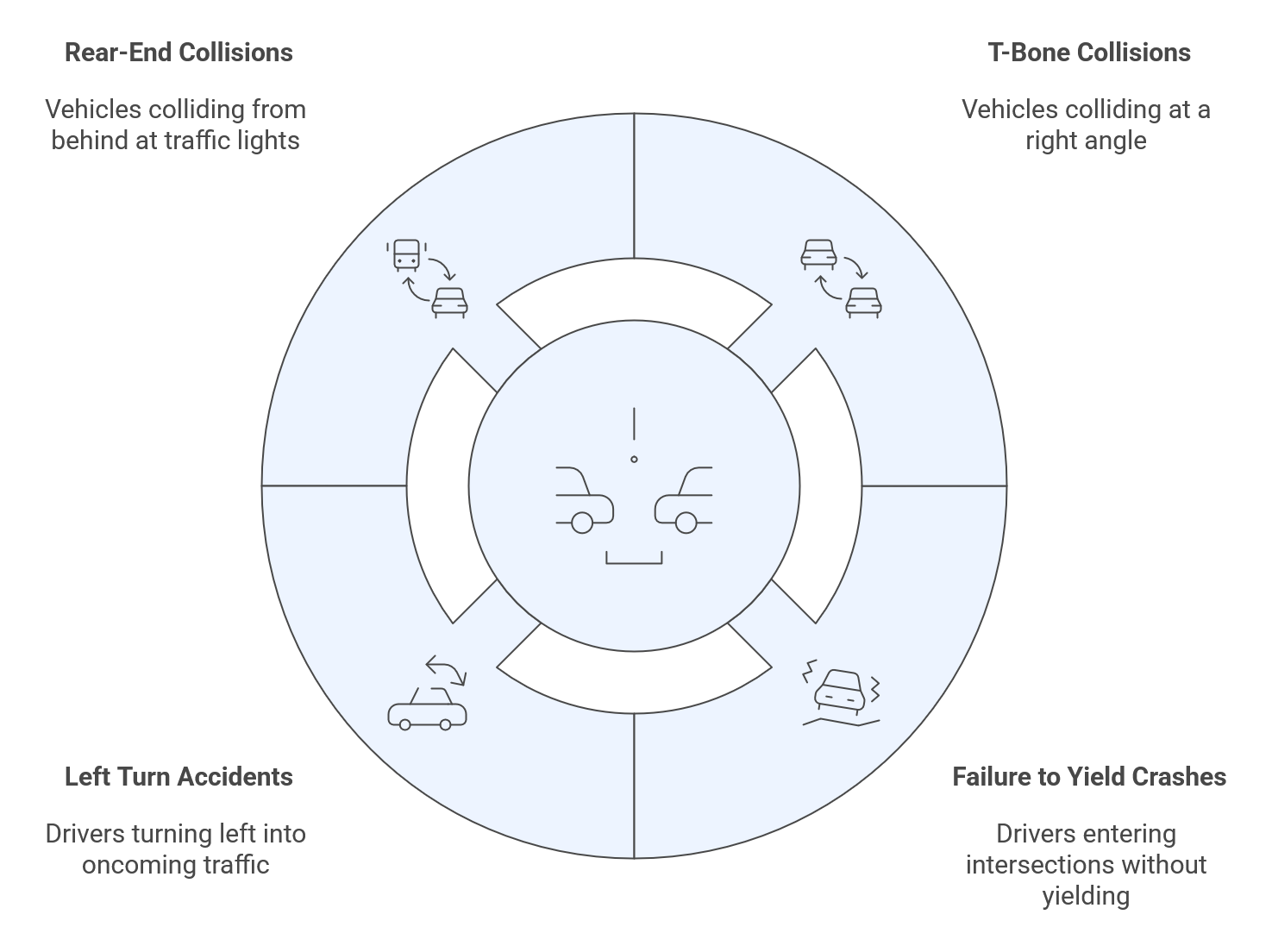
Intersection crashes can occur in several different ways depending on how vehicles approach the intersection and which driver fails to follow traffic laws or right-of-way rules. Because traffic flows from multiple directions at the same time, these collisions often happen quickly and leave drivers with very little time to react.
T-Bone Collisions:
One of the most common intersection crashes is a side-impact collision, often referred to as a T-Bone Accident, which occurs when the front of one vehicle strikes the side of another vehicle crossing through the intersection. These crashes frequently happen when a driver runs a red light or enters the intersection without yielding to cross traffic, placing occupants in the struck vehicle at significant risk of serious injury.
Failure to Yield Crashes:
Many intersection accidents occur when a driver fails to give the right-of-way to another vehicle that is legally proceeding through the intersection. These Failure to Yield Accidents often happen at stop signs, uncontrolled intersections, or when a driver misjudges the speed and distance of approaching traffic.
Left Turn Accidents:
Turning across traffic is another common cause of intersection crashes. Left Turn Accidents frequently occur when a driver attempts to cross oncoming traffic without enough time or space to safely complete the maneuver. Because vehicles traveling straight typically have the right-of-way, the turning driver is often found responsible for the collision.
Red Light Violations:
Some of the most serious intersection crashes occur when a driver ignores a traffic signal and enters the intersection after the light has changed. These Red Light Accidents often lead to high-speed side-impact collisions because other vehicles have already begun moving through the intersection with the right-of-way.
Rear-End Collisions:
Rear-end crashes are another common type of intersection accident. These collisions often occur when traffic slows or stops suddenly at a red light, stop sign, or congested intersection. Drivers who are distracted, following too closely, or unable to stop in time may strike the vehicle in front of them. In many cases, the trailing driver is considered responsible for the crash because motorists are expected to maintain a safe following distance, though certain situations can create disputes over fault in rear-end accidents.
Intersection accidents often occur when drivers misjudge right-of-way rules, fail to yield, or ignore traffic signals. Identifying the specific type of crash can help clarify how the collision happened and which driver may ultimately be responsible for the damages that follow.
Common Injuries in Intersection Accidents
Injuries in intersection accidents can be severe because these crashes often involve side-impact or angled collisions. When a vehicle is struck from the side, occupants have less structural protection than they would in a front or rear crash, increasing the likelihood of serious physical trauma. Many victims experience conditions such as head trauma, spinal injuries, and fractures, which are discussed in more detail in our common car accident injuries guide.
Injuries Frequently Seen in Intersection Crashes
| Injury Type | How It Occurs in Intersection Collisions |
|---|---|
| Traumatic brain injuries | Head impacts with windows, door frames, or interior surfaces during side-impact crashes |
| Spinal cord injuries | Sudden twisting or compression of the neck and spine during the collision |
| Broken bones | Fractures to ribs, arms, legs, or pelvis caused by the force of impact |
| Internal injuries | Damage to organs or internal bleeding caused by blunt force trauma |
These injuries can require extensive medical treatment and long recovery periods, making it important for victims to understand what compensation may be available after a serious intersection crash.
What Compensation Can Victims Recover After an Intersection Accident?
After an intersection accident in Michigan, injured drivers may be entitled to several types of financial compensation depending on the severity of their injuries and how the crash occurred. Michigan’s No-Fault insurance system typically provides initial benefits such as medical expenses and wage loss regardless of who caused the accident. However, victims who suffer serious injuries may also pursue additional damages from the at-fault driver through a third-party injury claim. Compensation in an intersection accident case may include:
- Medical expenses, including hospital treatment, surgery, rehabilitation, medication, and ongoing medical care related to the crash.
- Lost wages, covering income lost while recovering from injuries as well as reduced earning capacity if a victim cannot return to their previous job.
- Pain and suffering, which compensates victims for the physical pain, emotional distress, and reduced quality of life caused by serious injuries.
- Property damage, including repair or replacement of the vehicle and other personal property damaged in the crash.
- Wrongful death damages, which may be available to surviving family members if an intersection accident results in a fatality.
Intersection accidents can lead to significant financial and personal losses. Understanding the types of compensation available can help injured victims pursue the financial recovery they may need after a serious crash.
Understanding Liability After an Intersection Accident
Intersection accidents often raise complicated questions about right-of-way, traffic signals, and driver behavior leading up to the crash. Because multiple vehicles approach an intersection from different directions, even a small mistake such as running a red light, failing to yield, or misjudging oncoming traffic can result in a serious collision.
Determining fault in these crashes often requires carefully reviewing the available evidence, including police reports, witness statements, vehicle damage patterns, and traffic signal timing. In many cases, liability may even be shared between drivers under Michigan’s comparative negligence rules. Understanding how intersection crashes occur and how fault is evaluated can help injured victims better understand their legal rights after a collision.
For a broader overview of how liability is evaluated across different types of crashes, explore our Common Types of Car Accidents guide.
Speak With a Michigan Car Accident Lawyer
If you were injured in an intersection crash caused by another driver’s negligence, you may be entitled to pursue compensation for your medical expenses, lost income, and other damages. While Michigan’s No-Fault insurance system provides certain benefits regardless of fault, serious injury cases may also allow victims to pursue additional compensation from the responsible driver. An experienced attorney can review the circumstances of the crash and explain your legal options after a car accident in Michigan.