
Rear-end accidents in Michigan usually occur when a driver fails to maintain a safe following distance and crashes into the vehicle in front of them. Michigan’s No-Fault insurance system pays medical bills and wage loss regardless of who caused the crash. If the accident causes a serious impairment of body function, the injured victim may pursue pain and suffering damages against the at-fault driver.
Rear-end accidents may seem straightforward, but injury claims involving these crashes are often more complicated than they first appear. Insurance companies frequently try to minimize these claims by questioning how the crash happened or whether the injuries are as serious as the victim says. Even when the rear driver appears clearly responsible, insurers may still look for ways to shift blame or reduce the amount they pay.
For injured victims, that can make an already stressful situation even harder to navigate. Medical bills start piling up, missed work affects your income, and insurance adjusters begin asking questions right away. Understanding how liability works in Michigan rear-end accident cases and how No-Fault insurance interacts with injury lawsuits can make a major difference when it comes to protecting your rights and pursuing full compensation.
Key Takeaways
- Rear drivers are usually liable. Michigan drivers must maintain a safe following distance, so the rear driver is often presumed responsible unless unusual circumstances contributed to the crash.
- No-Fault covers initial losses. Michigan’s No-Fault insurance system typically pays medical expenses and wage loss benefits regardless of who caused the accident.
- Serious injuries allow lawsuits. Victims may pursue pain and suffering damages if the crash caused a serious impairment of body function under Michigan law.
- Evidence determines liability. Police reports, crash scene evidence, and witness statements often determine whether fault remains with the rear driver.
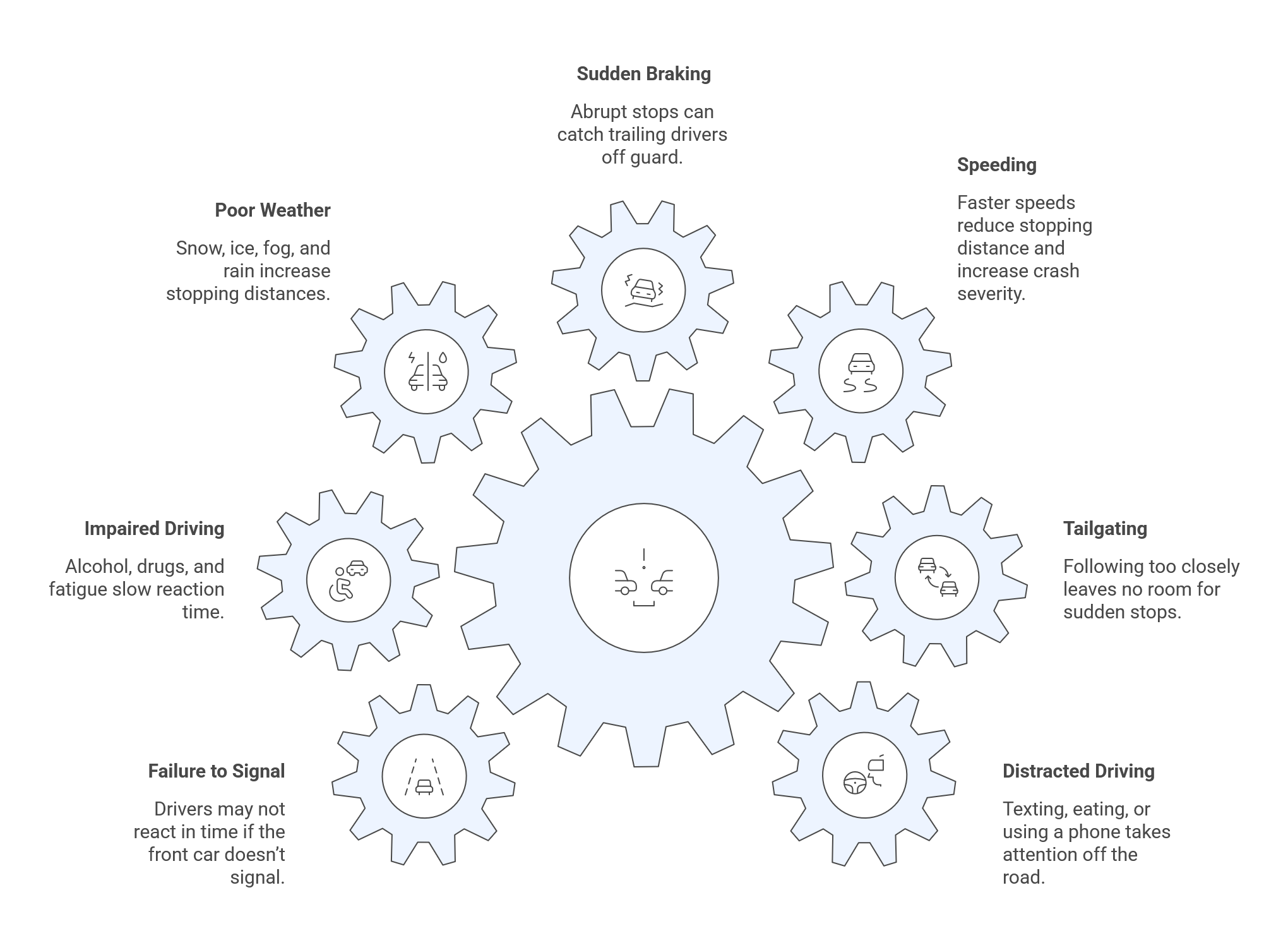
Rear-end collisions happen when one vehicle crashes into the back of another. These crashes are almost always caused by driver negligence and in most cases, the rear driver is at fault. Some of the most common causes include distracted driving, tailgating, and speeding, but dangerous road conditions and sudden stops can also play a role. Below are the most common reasons rear-end accidents happen.
| Cause | Description |
|---|---|
| Distracted Driving | Texting, eating, or using a phone takes attention off the road. |
| Tailgating | Following too closely leaves no room for sudden stops. |
| Speeding | Faster speeds reduce stopping distance and increase crash severity. |
| Sudden Braking | Abrupt stops can catch trailing drivers off guard. |
| Poor Weather Conditions | Snow, ice, fog, and rain increase stopping distances. |
| Impaired Driving | Alcohol, drugs, and fatigue slow reaction time. |
| Failure to Use Turn Signals | Drivers may not react in time if the front car doesn’t signal. |
Injuries Caused by Rear-End Collisions
Even at low speeds, rear-end crashes can cause serious injuries. The sudden impact forces the body forward and backward, straining muscles, joints, and the spine. Many injuries aren’t immediately noticeable, but symptoms like stiffness, headaches, or back pain can appear hours or even days later.
Whiplash is one of the most common injuries, but rear-end collisions can also lead to spinal damage, concussions, and chronic pain. Some injuries require long-term medical care or even surgery to recover fully. Below are the most common injuries caused by rear-end collisions:
| Injury | How It Happens in a Rear-End Crash |
|---|---|
| Whiplash | Rapid back-and-forth motion strains neck muscles and ligaments. |
| Back & Spinal Injuries | Compressed or herniated discs, fractures, and nerve damage. |
| Head & Brain Injuries | Impact with headrest, steering wheel, or dashboard causes concussions. |
| Airbag-Related Injuries | Facial fractures, burns, and chest trauma from deployment. |
| Soft Tissue Damage | Strains, sprains, and torn ligaments that worsen over time. |
Who Is at Fault for a Rear-End Collision?
In many rear-end accidents, the driver in the rear is considered at fault because Michigan law requires motorists to maintain a safe following distance and remain in control of their vehicle. When a driver follows too closely, becomes distracted, or fails to stop in time, they may be responsible for the collision. However, liability is not automatic, and the specific circumstances surrounding the crash can affect who was at fault for the accident.

Insurance companies sometimes assume rear-end accidents are simple liability cases. In reality, determining fault can be more complicated than it appears. Sudden braking, malfunctioning brake lights, or a driver reversing unexpectedly can create situations where responsibility is shared or disputed under Michigan law.
Fault in rear-end collisions is often determined by examining driver behavior leading up to the crash, including following distance, speed, distraction, and whether either driver violated Michigan traffic laws. While the rear driver is frequently responsible, certain situations may create shared fault or shift liability to the front driver. The table below outlines several common rear-end accident scenarios and how fault may be evaluated under Michigan law. If you want to understand how this legal standard applies to crash investigations, you can learn more about how negligence is proven in a Michigan car accident case.
| Accident Scenario | Likely Driver at Fault | Explanation |
|---|---|---|
| Rear driver was tailgating | Rear driver | Following too closely reduces stopping distance and often leads to rear-end collisions. |
| Rear driver was distracted | Rear driver | Drivers who are not paying attention may fail to stop in time to avoid a crash. |
| Rear driver was speeding | Rear driver | Excessive speed reduces reaction time and increases stopping distance. |
| Front driver suddenly slammed on brakes | Possibly shared | Liability may depend on whether the sudden braking was reasonable under the traffic conditions. |
| Front driver had broken brake lights | Front driver | Fault may shift if the rear driver had no warning that the vehicle ahead was stopping. |
| Front driver reversed unexpectedly | Front driver | Reversing into traffic can create a collision the rear driver cannot reasonably avoid. |
| Rear driver slid on icy roads | Rear driver | Drivers must maintain control of their vehicle even in poor road conditions. |
| Multi-car rear-end collision | Shared or multiple drivers | Liability may be divided among several drivers depending on the chain of impacts. |
Can You Sue After a Rear-End Accident in Michigan?
Michigan’s No-Fault insurance covers medical bills and lost wages regardless of who was at fault, but it does not compensate for pain and suffering. If your injuries are severe, you may be able to sue the at-fault driver for additional compensation. To file a lawsuit, you must show that:
- Your injuries caused a serious impairment of body function (major impact on daily life).
- You have medical bills or lost wages beyond No-Fault coverage limits.
- The at-fault driver was reckless, such as speeding excessively or driving drunk.
If your case qualifies, you can pursue compensation for:
- Pain and suffering—for physical pain, emotional distress, and reduced quality of life.
- Excess medical bills—costs beyond what your No-Fault policy covers.
- Lost wages—if your injuries prevent you from working long-term.
- Wrongful death damages—if a loved one was killed in a rear-end crash.
Most rear-end accident claims go through Michigan’s No-Fault insurance system, but if your injuries are serious, a lawsuit may be the best way to pursue full compensation. Michigan accident victims generally have three years to file a lawsuit, although certain insurance deadlines may apply much sooner. Understanding these timelines and your legal options can be important when evaluating a potential injury claim.
What to Do After a Rear-End Accident in Michigan
A rear-end collision can leave you feeling shaken, frustrated, and unsure of what to do next. The steps you take immediately after the crash can impact your health, insurance claim, and legal case. Follow these essential steps after a rear-end accident:
| Step After a Car Accident | Action to Take |
|---|---|
| Check for Injuries | Assess yourself and passengers for injuries and call 911 immediately if anyone is hurt. |
| Call the Police | Report the crash so an official accident report is created, which can support insurance and legal claims. |
| Document the Scene | Take photos of vehicle damage, road conditions, traffic signals, and any visible injuries. |
| Gather Witness Information | Collect names and contact information from anyone who saw the crash. Witness statements may help establish fault. |
| Exchange Insurance and Contact Information | Share insurance details, driver’s license numbers, and vehicle information with the other driver. |
| Move to a Safe Location | If it is safe to do so, move vehicles out of traffic to reduce the risk of additional accidents. |
| Notify Your Insurance Company | Inform your insurance company about the accident so the claims process can begin. |
| Consider Speaking With a Car Accident Lawyer | Before accepting a settlement, legal guidance can help you understand the value of your claim. |
Compensation for Rear-End Accident Victims
If you were injured in a rear-end accident in Michigan, you may be entitled to compensation through No-Fault insurance or by filing a lawsuit against the at-fault driver. The type and amount of compensation depend on the severity of your injuries and how the accident has affected your life. Below are the types of compensation available after a rear-end accident:
| Compensation Type | What It Covers |
|---|---|
| No-Fault Medical Benefits | Pays for medical treatment related to the crash, including hospital care, surgery, rehabilitation, prescriptions, and long-term medical services. |
| Lost Wages (No-Fault PIP) | Reimburses a portion of lost income if accident injuries prevent you from working, subject to Michigan No-Fault limits. |
| Attendant Care Services | Covers in-home assistance if injuries require help with daily activities such as bathing, dressing, or mobility. |
| Medical Mileage Reimbursement | Allows recovery of transportation costs for travel to and from medical appointments related to the accident. |
| Household Replacement Services | Provides reimbursement for help with household tasks such as cleaning, cooking, or childcare when injuries prevent normal activities. |
| Home and Vehicle Modifications | Covers necessary modifications such as wheelchair ramps, accessible bathrooms, or adapted vehicles when severe injuries occur. |
| Pain and Suffering Damages | May be recovered through a lawsuit if the injury meets Michigan’s serious impairment of body function threshold. |
| Excess Medical Expenses and Lost Wages | Allows recovery of additional damages if medical costs or lost income exceed available No-Fault coverage. |
| Mini-Tort Vehicle Damage Claim | Allows recovery of up to $3,000 for vehicle damage when another driver is at fault. |
Why Choose The Clark Law Office?
If you were injured in a rear-end accident, choosing the right lawyer can make a significant difference in how your case is handled and the compensation you recover. Rear-end crashes may seem straightforward, but insurance companies often dispute injuries, minimize claims, or argue that the collision was minor. Speaking with a Michigan lawyer who handles serious car accident cases can help you understand how the state’s No-Fault insurance system applies to your situation and whether you may have the right to pursue additional compensation beyond insurance benefits.
At The Clark Law Office, we take a different approach than large firms that treat cases like numbers. Your case will not be handed off to associates or passed between departments. You will work directly with an attorney who focuses on serious injury cases and understands how to challenge insurance companies that try to reduce or deny legitimate claims.
- Personalized Attention – Your case won’t be handed off to an associate or paralegal. You’ll work directly with an experienced Michigan car accident lawyer who genuinely cares about your recovery.
- Proven Results – We’ve helped accident victims recover millions in settlements and verdicts in Michigan car accident cases.
- No Fees Unless We Win – You don’t pay anything unless we win your case. No upfront costs, no hidden fees.
- We Take on the Insurance Companies – Insurers try to minimize claims—we make sure you get the maximum compensation you’re entitled to.
Bottom line: Rear-end crashes are just one of several collision types that occur on Michigan roads. You can learn how they compare to other crashes in our complete guide to common types of car accidents in Michigan.
Frequently Asked Questions About Rear-End Accidents in Michigan
Is The Rear Driver Always At Fault In A Rear-End Accident?
Not always. While the rear driver is usually presumed to be at fault, there are exceptions. If the front driver suddenly slammed on their brakes, had broken brake lights, or was reversing, they may share liability. Michigan’s comparative negligence laws allow fault to be split between drivers in certain cases.
Can I Sue For A Rear-End Accident In Michigan?
Yes, but only if your injuries meet Michigan’s serious impairment threshold. You can sue the at-fault driver for pain and suffering, excess medical bills, and lost wages if your injuries significantly affect your daily life. Otherwise, your No-Fault PIP insurance will cover medical bills and lost income.
How Much Compensation Can I Get For A Rear-End Car Accident?
Compensation depends on the severity of your injuries and whether you can file a third-party lawsuit. You may receive No-Fault benefits for medical bills, lost wages, and attendant care. If your injuries meet the threshold, you can recover pain and suffering damages. Michigan’s Mini-Tort law also allows you to claim up to $3,000 for vehicle damage if the other driver was at fault.
What Should I Do If The Insurance Company Denies My Claim?
If your No-Fault insurer denies or undervalues your claim, you should request a written explanation for the denial, gather evidence such as medical records and police reports, and speak with a Michigan car accident lawyer to challenge the denial and maximize your settlement.
How Long Do I Have To File A Claim After A Rear-End Accident?
No-Fault insurance claims must be filed within one year of the accident. Third-party lawsuits against the at-fault driver must be filed within three years. Mini-Tort claims for vehicle damage should be filed as soon as possible.
What If I Was Rear-Ended By An Uninsured Driver?
If the at-fault driver doesn’t have insurance, you may still be covered through your own Uninsured Motorist (UM) or Underinsured Motorist (UIM) coverage if included in your policy. A lawyer can help you explore all available compensation options.