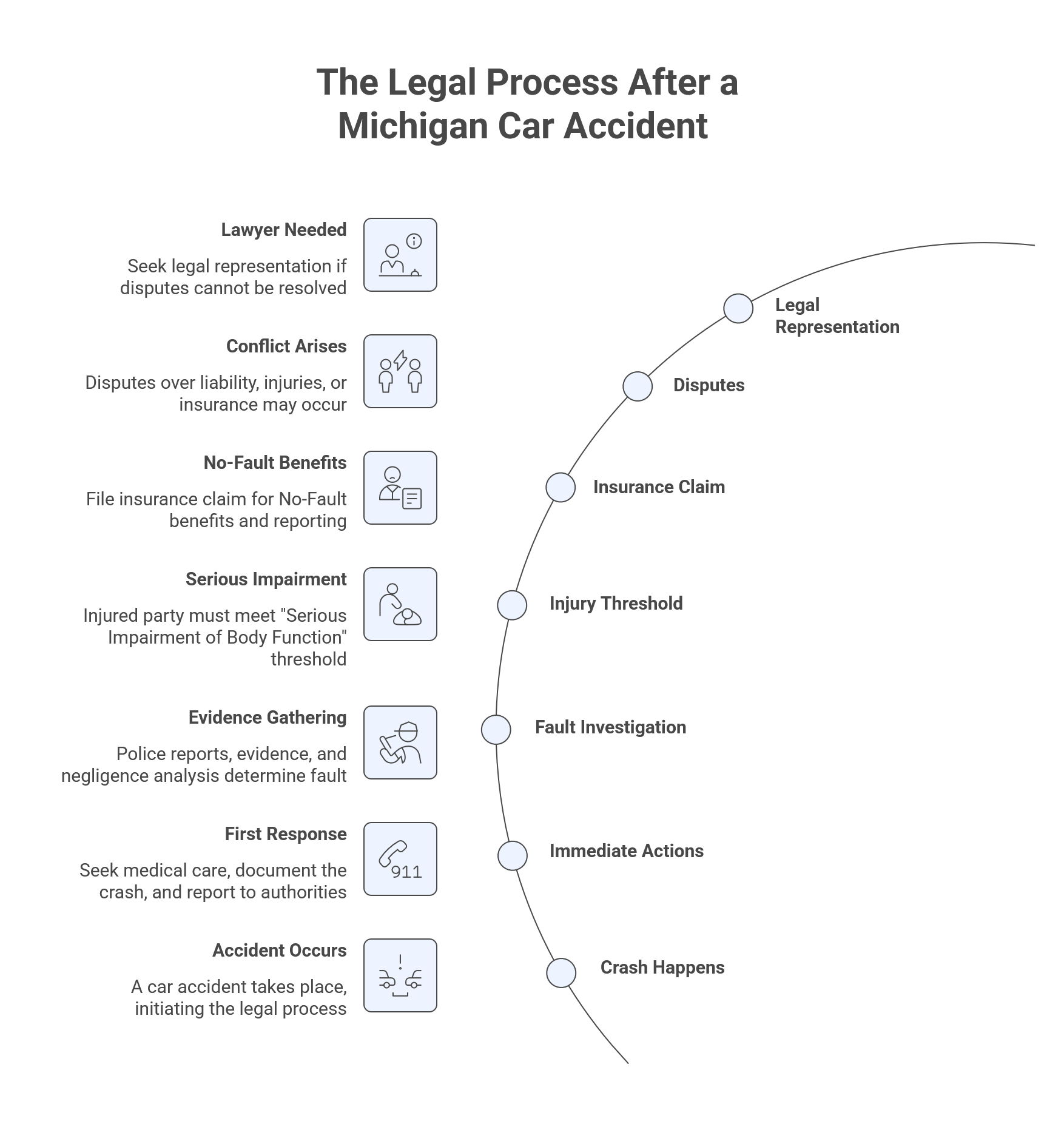
Michigan’s legal framework creates a multi-step process for evaluating accident claims. Victims must report the crash, document injuries, file insurance claims, and establish fault when liability is disputed. These steps can affect both the benefits available through no-fault insurance and the ability to pursue additional compensation from the responsible driver.
This guide explains how the legal process works after a crash, including what steps to take immediately after an accident, how fault is determined, how insurance claims are filed, and when legal representation may become necessary. For a detailed breakdown of the statutes governing these cases, see our page explaining Michigan car accident laws.
What To Do Immediately After a Car Accident
The steps taken immediately after a car accident can affect both safety and how an insurance claim or legal case is evaluated later. Taking the right actions at the scene helps preserve important evidence and can make it easier to determine what happened.
Prioritize Safety and Medical Care
Check for injuries and call emergency services if anyone needs medical attention. Even if injuries seem minor, documenting medical symptoms early can be important for both treatment and insurance claims.
Document The Accident Scene
Take photographs of vehicle damage, road conditions, traffic signals, and any visible injuries. Gathering this information immediately after the crash can help establish how the accident occurred. Our guide on what to do after a car accident explains these steps in greater detail.
Report the Crash When Required
In many situations, contacting law enforcement helps create an official record of the accident that insurance companies rely on when evaluating claims. Learn more about when reporting is necessary in do you need a police report after a car accident.
Be Cautious When Speaking With Insurance Companies
Insurance adjusters may request recorded statements shortly after a crash, sometimes before fault or injuries are fully understood. Understanding your rights before providing a statement can help avoid misunderstandings during the claims process. See should you give a recorded statement after a car accident for more guidance.
How Fault Is Determined After a Car Accident
Determining who caused a car accident is one of the most important steps in evaluating an injury claim. In Michigan, fault is determined by analyzing driver behavior, applying comparative negligence rules, and reviewing evidence from the crash. Investigators, insurance companies, and attorneys often evaluate several factors when determining liability.
Key Factors Used to Determine Fault in Michigan Car Accidents
Fault in Michigan car accident cases is determined by evaluating driver behavior, applying comparative negligence rules, and analyzing evidence from the crash.
The Injury Threshold Required to File a Lawsuit
Michigan’s no-fault insurance system limits when an injured person can sue the at-fault driver after a car accident. While medical expenses and certain financial losses are typically covered through no-fault benefits, a lawsuit for pain and suffering is only allowed if the injury meets the state’s legal threshold. Under MCL 500.3135, an injured person must generally prove that the crash caused a serious impairment of body function before pursuing non-economic damages against the responsible driver.
Courts evaluate whether an injury affects a person’s ability to live their normal life when applying this standard. The severity of the injury, how long it lasts, and how it impacts daily activities are all considered when determining whether the threshold is met. Understanding Michigan’s serious impairment of body function rule is essential because it determines whether an injured driver can pursue compensation beyond no-fault insurance benefits.
Filing an Insurance Claim After a Crash
After a car accident in Michigan, injured drivers typically turn to their own insurance company for benefits under the state’s no-fault system. These benefits may include medical expenses, wage loss, replacement services, and other crash-related costs depending on the coverage selected under the policy. Reporting the accident to your insurer and beginning the claims process is an important step after a crash. Understanding how to file an insurance claim after a car accident can help ensure that required information and documentation are submitted properly.
Michigan law also imposes strict deadlines for seeking certain benefits after an accident. In many cases, injured drivers must file an application for no-fault benefits within one year of the crash in order to preserve their rights. Missing this deadline can affect the ability to recover medical expenses or other benefits. Knowing how long you have to file a car accident claim in Michigan is critical for protecting your legal options after a collision.
If disputes arise during the claims process, resolving the issue may require filing a lawsuit in Michigan’s civil court system. These cases follow a structured legal process that typically begins when a complaint is filed and the parties begin exchanging evidence through discovery. The basic steps involved in a Michigan lawsuit are outlined in this overview of how civil cases work in Michigan courts.
Common Disputes After a Car Accident
Even when a crash appears straightforward, disagreements can arise during the insurance and claims process. Disputes often involve conflicting statements, questions about liability, or disagreements about injuries and damages.
When You May Need a Car Accident Lawyer
Not every crash requires legal representation, but certain situations make it much more important to speak with an attorney.
Understanding Michigan Car Accident Laws
Michigan car accident claims are governed by a detailed set of statutes that regulate no-fault insurance benefits, liability rules, and the legal standards for pursuing compensation after a crash. These laws determine how benefits are paid, when lawsuits are allowed, and what deadlines apply to injury claims. For a deeper explanation of the legal framework that governs these cases, see our overview of Michigan car accident laws.
Frequently Asked Questions
Get a Free Case Evaluation
The best way to understand your legal options after a crash is to have an experienced attorney evaluate the specific details of your case. Every accident is different, and factors such as injury severity, available insurance coverage, and fault can significantly affect what compensation may be available. You can learn more about how these claims work on our Michigan car accident lawyer page.
At The Clark Law Office, cases are handled with direct attorney involvement from start to finish. We review the accident, medical records, insurance coverage, and liability issues to provide a clear assessment of your situation and the legal options available under Michigan law.
Contact us today schedule your free consultation. Early action helps preserve evidence, address insurance issues, and position your claim for the strongest possible outcome.