
The most common types of car accidents include rear-end collisions, T-bone crashes, head-on collisions, rollover accidents, and intersection accidents. Other frequent crash scenarios involve distracted driving, drunk driving, construction zones, rideshare vehicles, and accidents involving pedestrians or bicyclists. Each type of accident typically occurs under different traffic conditions and may raise different liability issues under Michigan law.
Car accidents rarely occur randomly. Many of the common types of car accidents in Michigan follow recognizable patterns based on driver behavior, traffic conflicts, and roadway conditions. Rear-end collisions frequently occur in heavy traffic, intersection crashes often involve right-of-way violations, and distracted driving accidents continue to increase as mobile device use becomes more common.
Understanding these crash patterns can help explain how accidents occur and how liability may be evaluated after a collision. This guide examines the most common types of car accidents in Michigan, how these crashes typically happen, and how different accident scenarios may affect injury claims and fault determinations.
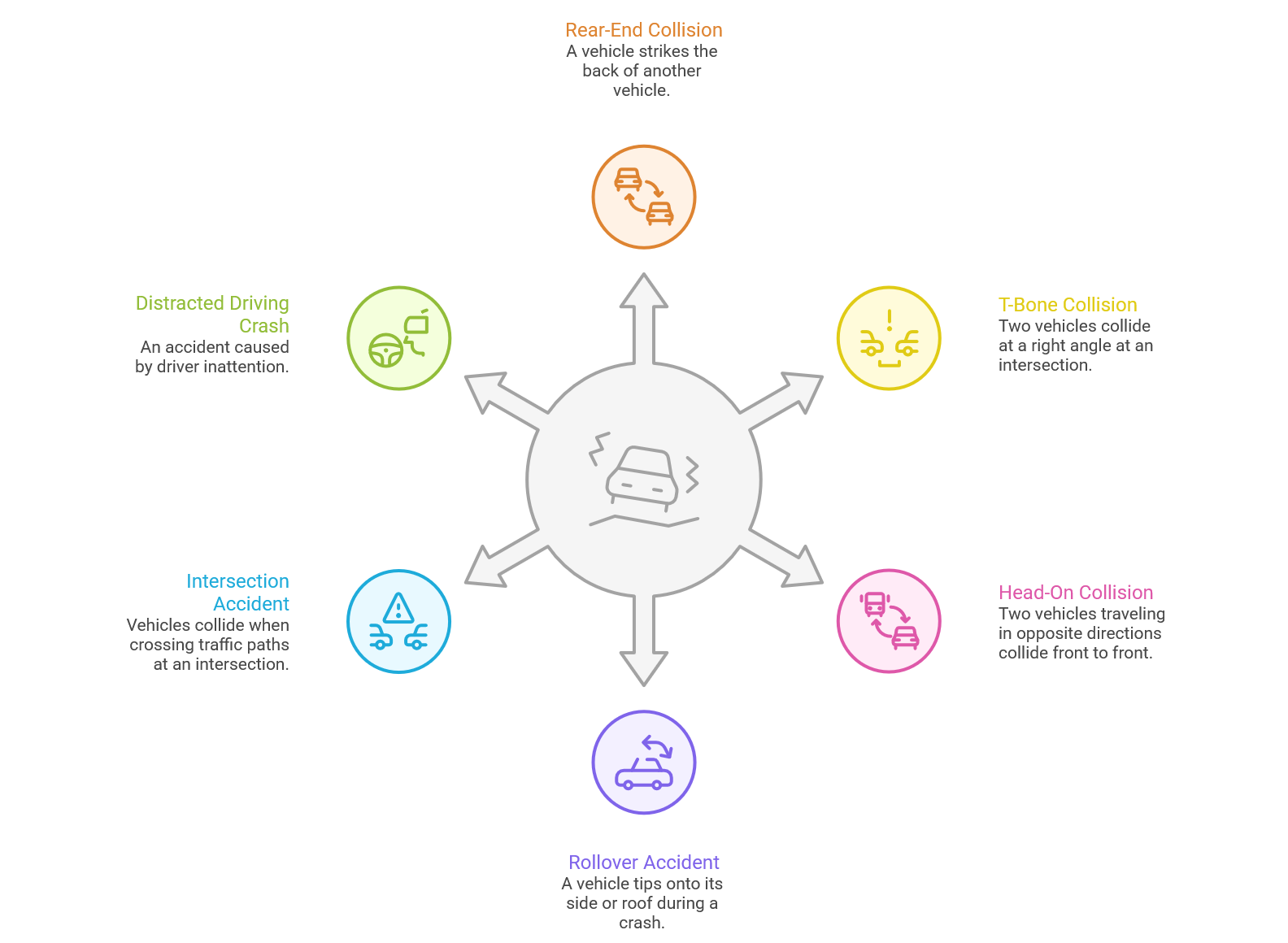
- Most car accidents fall into recognizable crash patterns such as rear-end or intersection collisions.
- Many crashes occur due to driver behavior, including distraction, impairment, or inexperience.
- Certain accidents involve specific road environments, such as construction zones or roundabouts.
- Some crashes involve vulnerable road users, including pedestrians and bicyclists.
While car crashes occur in many different ways, certain accident types happen far more frequently than others. Traffic congestion, right-of-way conflicts, driver distraction, and roadway design all influence how collisions occur. Rear-end collisions and intersection crashes are among the most common patterns on Michigan roads, while other accident types occur less often but can involve more severe impacts. The table below highlights several common car accident types along with the conditions that typically contribute to these crashes.
| Accident Type | Common Cause | Typical Location |
|---|---|---|
| Rear-End Collisions | Following too closely, sudden stops | Heavy traffic, intersections |
| T-Bone Accidents | Failure to yield right of way | Intersections |
| Head-On Collisions | Crossing centerline or wrong-way driving | Two-lane roads, rural highways |
| Rollover Accidents | Loss of vehicle control or sharp turns | Curves, high-speed roads |
| Intersection Accidents | Signal or stop sign violations | Intersections and junctions |
| Distracted Driving Crashes | Phone use, inattention | Any roadway |
| DUI & Drunk Driving Crashes | Alcohol or drug impairment | Nights, weekends |
| Pedestrian Accidents | Failure to yield to pedestrians | Crosswalks, intersections |
| Bicycle Accidents | Visibility issues, unsafe passing | Urban streets |
| Construction Zone Accidents | Lane shifts, reduced speeds | Work zones |
Bottom Line: Most car accidents fall into a small number of predictable crash patterns, and understanding how these collisions occur can help explain how liability is evaluated after a Michigan car accident.
Common Multi-Vehicle Collision Types
Many car accidents involve direct collisions between two vehicles traveling in different directions or at different speeds. These crashes often occur when drivers misjudge traffic conditions, fail to yield the right of way, or cannot stop in time to avoid another vehicle. The most common multi-vehicle collision patterns include the following:
- Rear-End Accidents – These collisions occur when one vehicle strikes the back of another vehicle, often because a driver is following too closely or fails to stop in time during traffic slowdowns.
- T-Bone Accidents – Also known as side-impact collisions, these crashes usually happen when vehicles cross paths at intersections and one driver fails to yield the right of way.
- Head-On Collisions – These accidents occur when vehicles traveling in opposite directions collide front-to-front, often due to lane departures or wrong-way driving.
- Rollover Accidents – Certain crashes can cause a vehicle to tip onto its side or roof, particularly when high speeds, sharp steering maneuvers, or uneven roadway conditions are involved.
Bottom line: Each of these collision patterns raises different questions about fault, injury severity, and insurance coverage, which is why understanding how these crashes happen can be important when evaluating a car accident claim.
Intersection and Traffic Control Accidents
A large percentage of serious car accidents occur in areas where traffic flow is controlled by signals, stop signs, or other right of way rules. These crashes often happen when drivers misjudge gaps in traffic, fail to obey signals, or attempt to move through intersections too quickly. Because multiple vehicles are approaching from different directions, mistakes in these situations can lead to severe side impact collisions and complex fault disputes.
- Intersection Accidents – These crashes frequently occur when drivers fail to yield, run red lights, or misjudge the speed of approaching traffic while crossing or turning through an intersection.
- Roundabout Accidents – Collisions inside roundabouts often involve confusion about right of way rules, improper lane usage, or drivers entering the circle without yielding to vehicles already traveling within it.
- Hit and Run Accidents – In some crashes, a driver leaves the scene before exchanging information or assisting injured victims, which can complicate both the investigation and the insurance claim process.
Bottom line: Traffic controlled areas create complex driving environments where small mistakes can lead to serious collisions and disputed liability.
Driver Behavior-Related Accidents
Many serious crashes occur because of driver decisions rather than road conditions or vehicle defects. Investigators often examine driver behavior in the moments leading up to a collision to determine whether distraction, impairment, or inexperience played a role in causing the crash.
| Driver Behavior | How It Causes Accidents |
|---|---|
| Distracted Driving | Looking away from the road to use a phone, adjust navigation, or interact with passengers can delay reaction times and prevent drivers from noticing hazards. |
| Alcohol or Drug Impairment | Alcohol and drugs reduce coordination, slow reaction time, and impair judgment, significantly increasing the likelihood of serious crashes. |
| Inexperienced Drivers | Teen drivers and new drivers may misjudge traffic gaps, speed, or braking distance in complex traffic environments. |
Bottom Line: Drivers who want to learn more about these crash scenarios can review our detailed pages on distracted driving accidents, DUI and drunk driving accidents, and teen driver accidents, which explain how these cases are investigated and how liability is determined.
Accidents Involving Vulnerable Road Users
Some traffic collisions involve people who are not protected by the structure of a motor vehicle. Pedestrians and bicyclists are often referred to as vulnerable road users because they have little physical protection during a crash, which means even relatively low-speed impacts can lead to serious injuries. These accidents commonly occur when drivers fail to yield at crosswalks, make unsafe turns at intersections, or do not allow enough space when passing cyclists on the roadway. Because of the higher risk of severe injuries, investigations often focus closely on right-of-way rules and driver awareness. Learn more about how these incidents are evaluated in our pages covering pedestrian accidents and bicycle accidents.
Commercial and Transportation Accidents
Some car accidents involve vehicles that are part of commercial transportation systems rather than privately operated passenger vehicles. These crashes can raise additional legal questions because transportation companies, commercial insurers, or third-party operators may be involved in determining liability.
Collisions involving public transit buses, school buses, or private charter buses often involve multiple injured passengers and may require evaluating the responsibilities of both the bus operator and the organization responsible for maintaining the vehicle.
Uber, Lyft, and Rideshare Accidents
Accidents involving rideshare drivers can create complex insurance issues because coverage may depend on whether the driver was actively transporting a passenger, waiting for a ride request, or using the vehicle for personal travel at the time of the crash.
Roadway and Traffic Environment Accidents
Construction zones create dangerous driving conditions because traffic patterns change quickly and lanes are often narrowed or shifted. Many crashes occur when drivers ignore reduced speed limits, fail to follow warning signs, or attempt unsafe lane changes in these areas. These collisions can endanger both other motorists and road workers, which is why investigators often examine whether drivers adjusted their behavior to match the conditions. Learn more about how liability is evaluated in construction zone accidents.
Why Understanding Crash Type Matters
The type of car accident involved in a crash often shapes how liability is investigated and how an injury claim is evaluated. Different collision patterns create different legal questions and evidence. For example, rear-end collisions frequently involve issues such as following distance and driver attention, while intersection crashes often require analyzing right-of-way rules, traffic signals, and driver visibility.
Crash type can also influence the severity of injuries and the insurance issues involved in a case. Certain accidents may involve impaired driving, commercial vehicles, roadway design factors, or multiple vehicles. Understanding how the crash occurred helps investigators focus on the most important evidence and determine how fault may ultimately be assigned.
Explore Related Michigan Car Accident Guides
These guides explain how Michigan accident claims work, including the legal process, common injuries, insurance rules, and how compensation is evaluated.
Michigan Car Accident Legal Process
Learn how accident claims move from investigation through negotiation, litigation, and possible trial.
Common Car Accident Injuries in Michigan
Understand the injuries most often involved in serious Michigan auto accident cases.
Michigan Car Accident Claims and Compensation
Learn how damages are calculated and what factors influence the value of a claim.
Michigan Car Accident Insurance and No-Fault Guide
Understand how Michigan no-fault insurance works and which coverage may apply after a crash.
Frequently Asked Questions
Which types of car accidents cause the most injuries?
Rear-end collisions, intersection crashes, and head-on collisions are among the accident types most likely to cause injuries. Intersection crashes often involve drivers running red lights or failing to yield, while rear-end crashes frequently occur in traffic when drivers are distracted or following too closely. Head-on collisions tend to cause the most severe injuries because the impact forces are significantly higher.
Are rear-end accidents always the other driver's fault?
Rear-end accidents are often caused by the driver in the rear vehicle because Michigan law requires drivers to maintain a safe following distance. However, fault is not automatic in every case. Liability may be shared if the lead driver stopped suddenly without reason, had non-functioning brake lights, or reversed unexpectedly.
How is fault determined in intersection crashes?
Fault in intersection crashes is determined by reviewing right-of-way rules, traffic signals, and driver behavior. Police reports, witness statements, and crash evidence help investigators determine which driver violated traffic laws. In some cases, Michigan’s comparative negligence rules allow fault to be shared between drivers.
Get a Free Consultation After a Michigan Car Accident
Understanding the type of accident involved in a crash is often the first step in evaluating an injury claim. Different collision patterns raise different legal questions, and the details surrounding how the crash occurred can affect liability, insurance coverage, and the types of compensation that may be available under Michigan law. In many situations, speaking with an experienced Michigan car accident attorney can help clarify how these factors may affect your potential claim.
At The Clark Law Office, car accident cases are handled with direct attorney involvement from start to finish. We review police reports, medical records, insurance policies, and crash evidence to determine how fault may be established and what recovery options may exist for injured victims.
To learn more about your legal rights and options after a crash, contact us to schedule a free consultation and discuss your situation.

Attorney Review
Legally reviewed by
Matthew R. Clark focuses exclusively on personal injury and wrongful death cases throughout Mid-Michigan. He graduated from Michigan State University College of Law and trained at The Geoffrey Fieger Trial Practice Institute. His practice includes serious car accident, no-fault insurance, and catastrophic injury claims, and he has recovered millions for injured clients while providing direct attorney-level representation from start to finish.